
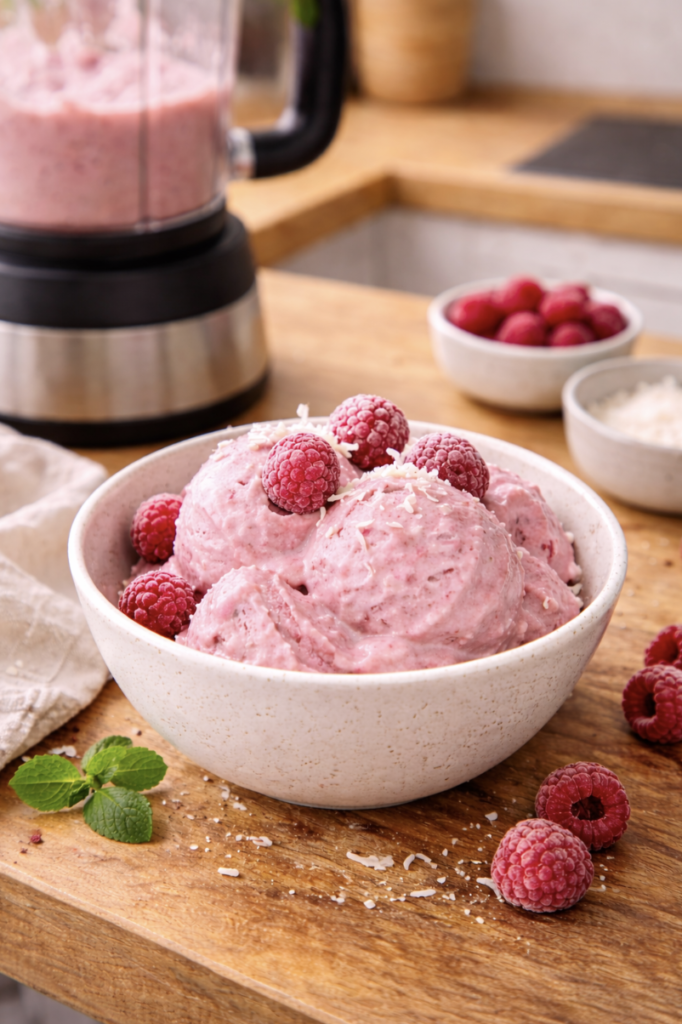
On warm summer days, there’s nothing better than something cold, refreshing, and slightly sweet — especially when it feels like a treat but still fits your goals. This simple raspberry banana ice cream is exactly that. It’s light, naturally sweet, and incredibly creamy, even though it’s made with just a few wholesome ingredients. Whether you’re craving something after lunch or looking for a guilt-free dessert in the evening, this is one of those recipes you’ll come back to all summer long.
Ingredients:
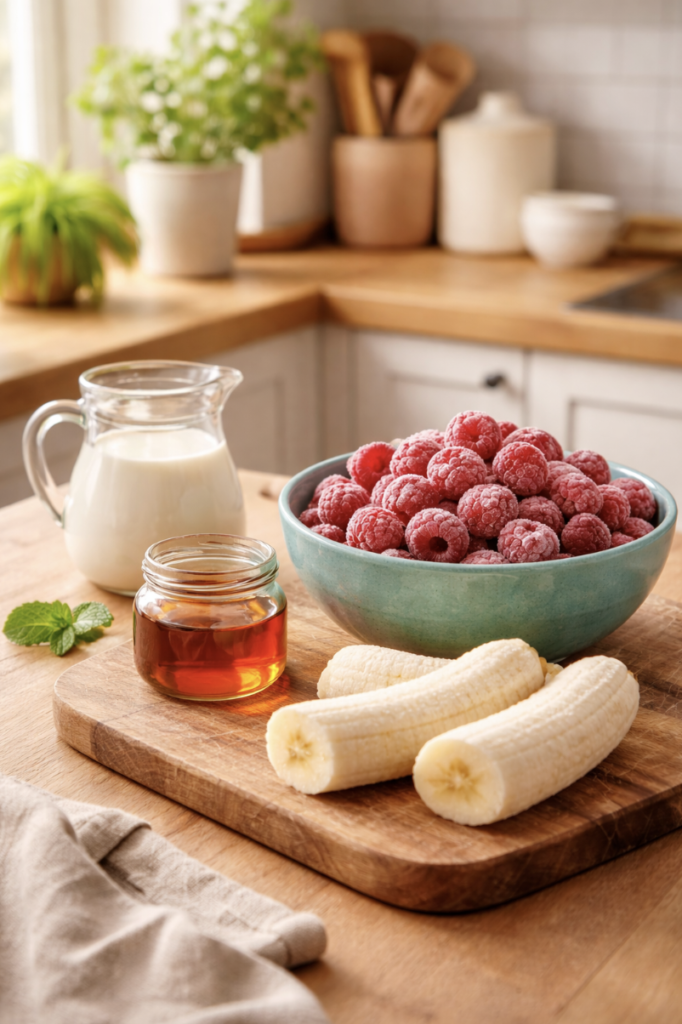
- 2 frozen bananas
- 1.5 cups frozen raspberries
- 1 tablespoon maple syrup (optional)
- 3–4 tablespoons almond milk
Step 1: Prepare the fruit
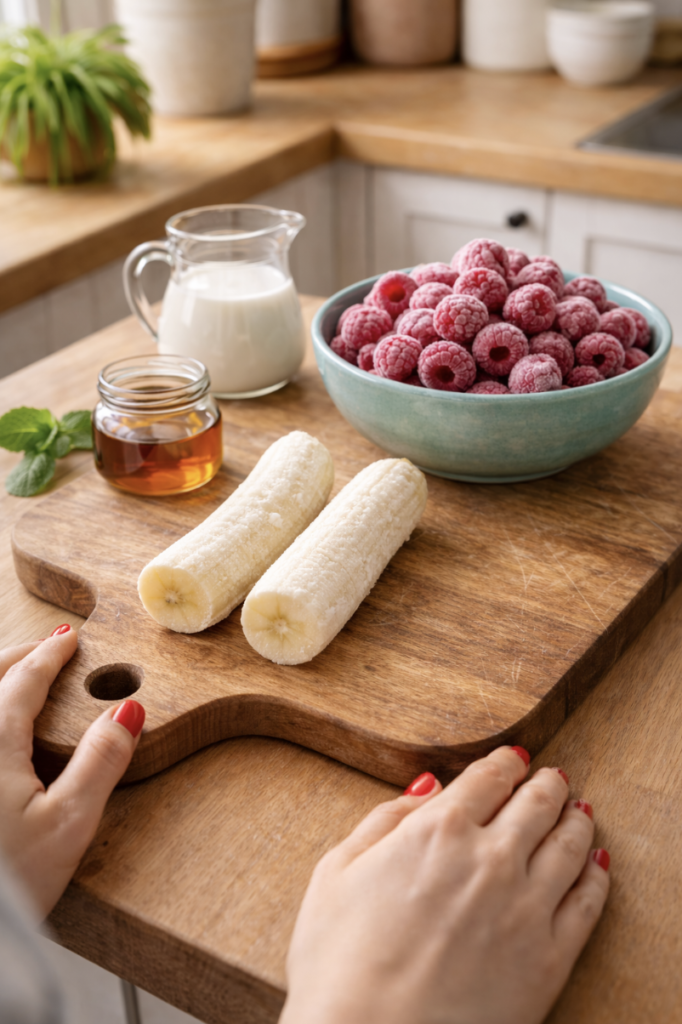
Start by making sure your bananas are fully frozen. For the best texture, peel the bananas before freezing them, because frozen banana peels are hard to remove later. If you have not done that already, just let the bananas sit at room temperature for a few minutes until the peel loosens slightly. You will need two frozen bananas and one and a half cups of frozen raspberries. Since both fruits are frozen, they will give the recipe its thick, creamy, ice-cream-like texture without needing heavy cream or extra fat.
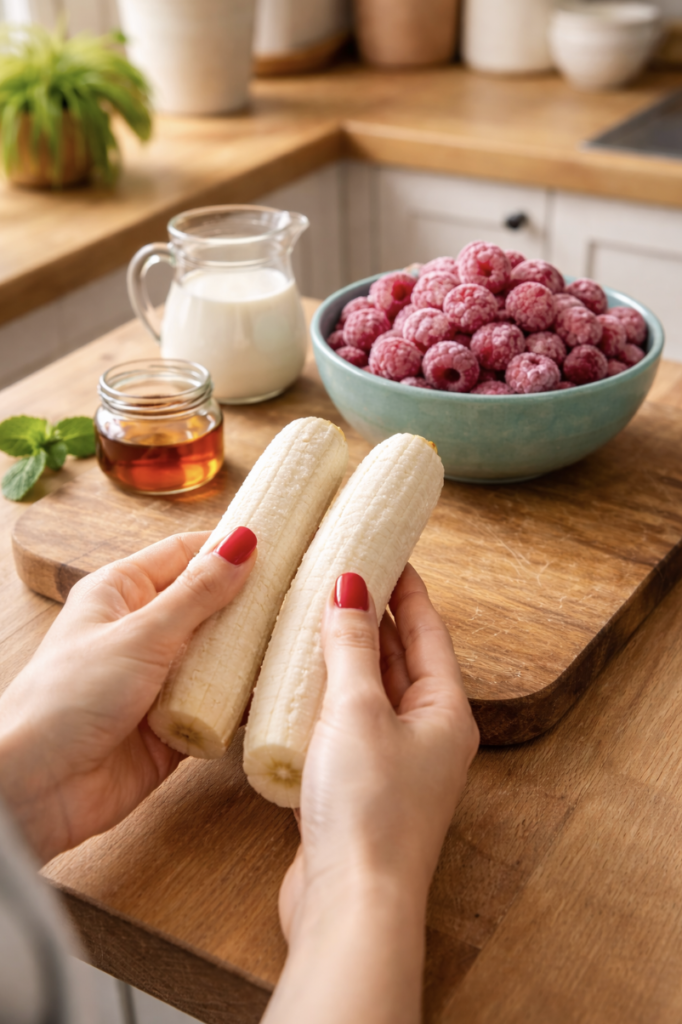
Step 2: Let the fruit soften slightly
Before blending, let the frozen bananas and raspberries sit out for about two to three minutes. This small step makes a big difference. If the fruit is too hard, it can be difficult for the blender or food processor to handle, and the texture may stay chunky for too long. You do not want the fruit to thaw completely, because that would make the mixture too thin. You only want it to soften just enough to blend more smoothly.
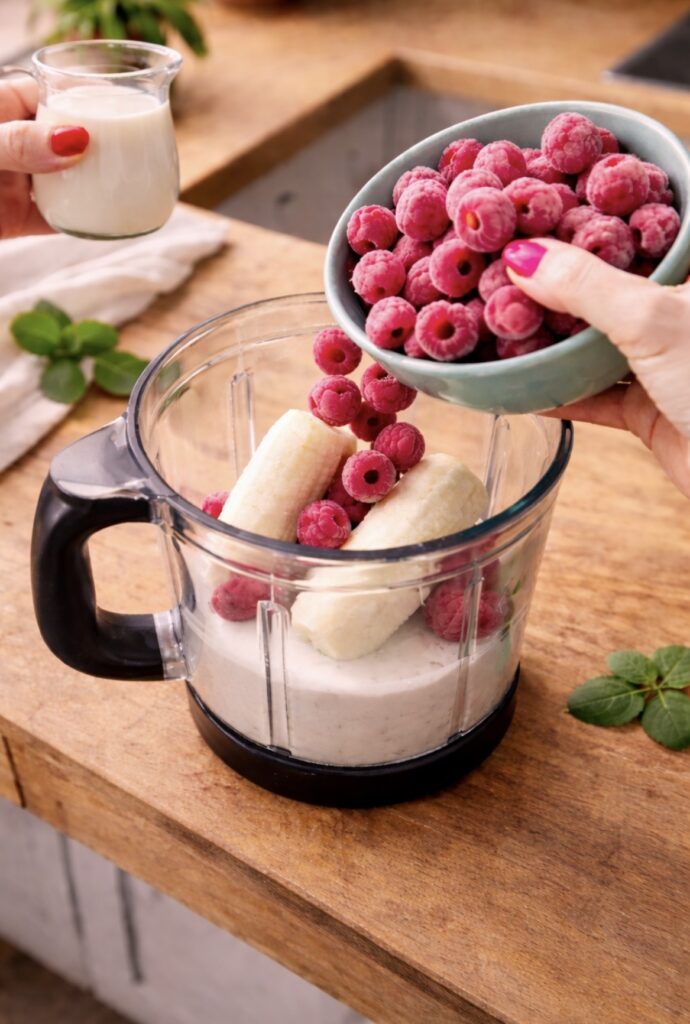
Step 3: Add the ingredients to the blender
Place the frozen bananas and frozen raspberries into a blender or food processor. Then add three tablespoons of almond milk to start with. This helps the blades move and brings the mixture together. If you want the recipe a little sweeter, add one tablespoon of maple syrup. The maple syrup is optional, because the bananas already provide natural sweetness. If you prefer a lighter version for weight loss, you can leave it out or only use a small amount.
Step 4: Start blending slowly
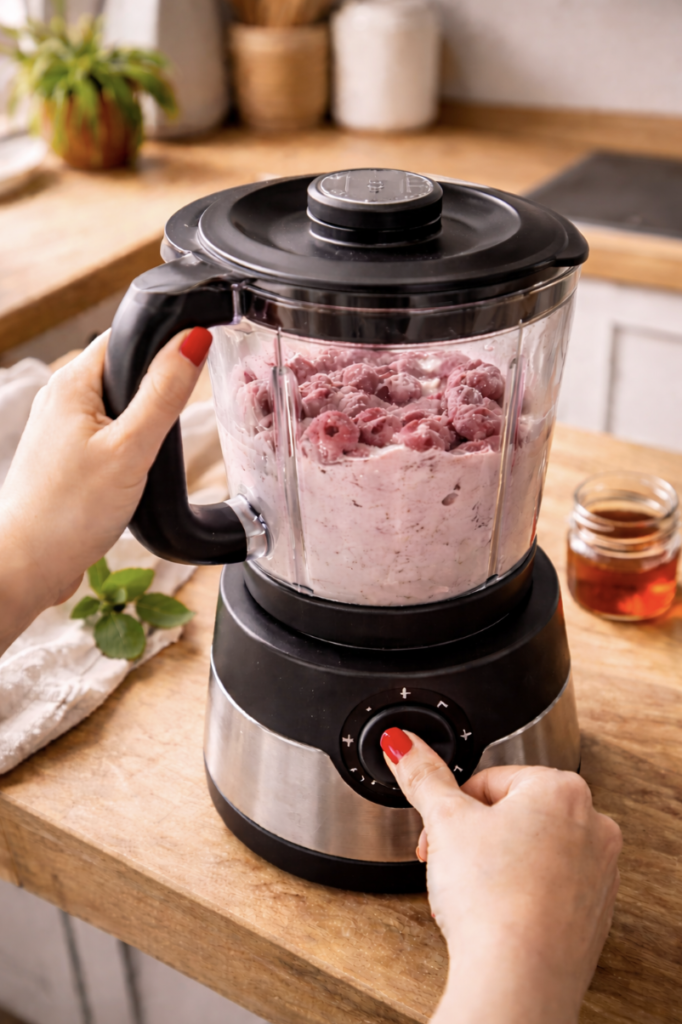
Begin blending on a low speed first. At the beginning, the mixture may look crumbly or too thick, and that is completely normal. Keep blending and stop once or twice to scrape down the sides with a spoon or spatula. This helps everything mix evenly. Be patient here, because frozen fruit takes a little time to turn creamy. If the mixture still seems too thick or the blender is struggling, add one more tablespoon of almond milk. Only add a small amount at a time, because too much liquid will make the ice cream more like a smoothie.
Step 5: Taste and adjust if needed
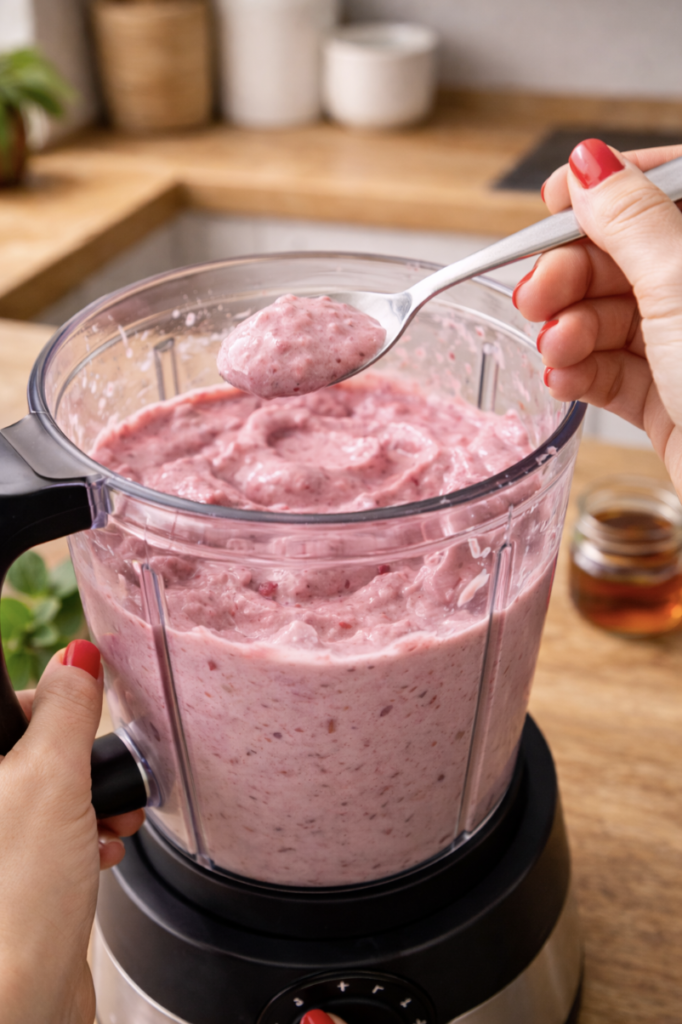
Once the mixture is smooth, taste it. If it is sweet enough for you, it is ready. If you want a little more sweetness, you can add a small drizzle of maple syrup and blend again for a few seconds. If the raspberry flavor feels too strong or tart, you can balance it by adding a few extra banana slices. This step helps you adjust the recipe to your own taste.
Step 7: Serve immediately for the best texture
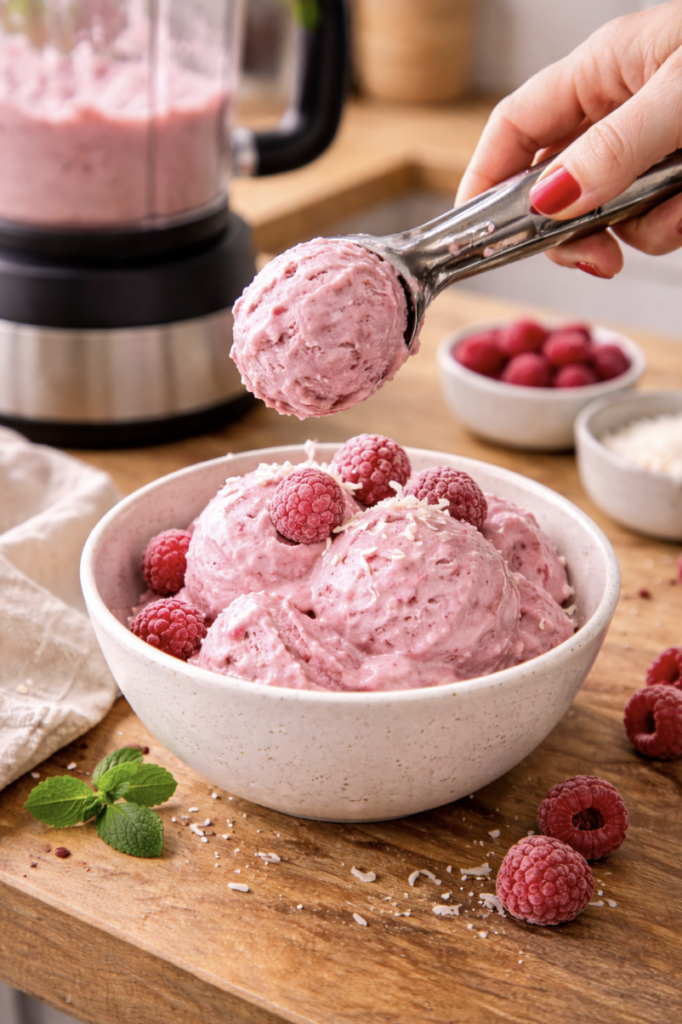
For the creamiest result, serve the mixture right away. Freshly blended banana raspberry ice cream has the best soft, fluffy texture at this point. Scoop it into a bowl and enjoy it immediately. This is when it tastes most like a healthy soft-serve dessert.
This recipe comes out to around 310–330 calories for the full portion, with roughly 65–70 grams of carbohydrates and about 42–48 grams of natural sugar coming mainly from the fruit and a small amount of maple syrup. It is very low in fat at around 2–3 grams and contains about 3–4 grams of protein, while providing a solid 10–12 grams of fiber, which makes it much more filling than typical desserts.
One of the biggest advantages of this ice cream is that it’s made entirely from natural ingredients, without added sugars or artificial components. The high fiber content helps keep you full longer, which can support weight loss, and it satisfies sweet cravings in a much lighter way.
Compared to regular store-bought ice cream, which often contains 500–800 calories per serving along with high amounts of added sugar and fat, this version is significantly lower in calories and much easier to fit into a calorie-controlled diet while still feeling like a treat.
If you have any suggestions for Lexi’s next recipe or ideas for different fruits I should try, feel free to share them. I’d genuinely love to hear your ideas and will happily bring them to life with a lot of care and heart.
Leave a Reply