
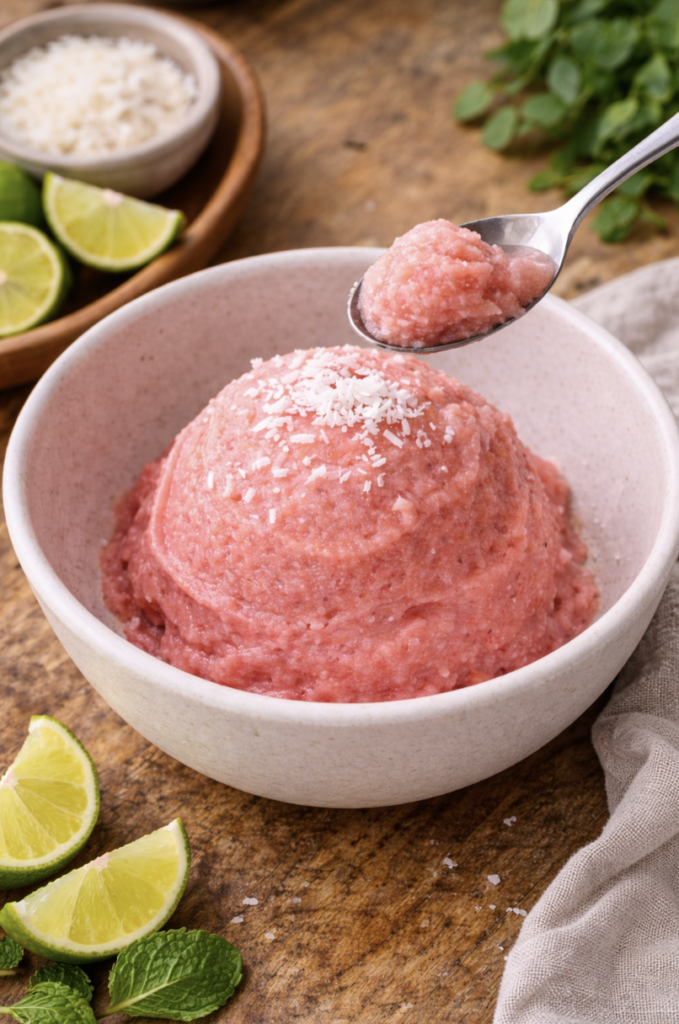
I’ve always loved ice cream so much, especially in the summer, when all I want is something cold, sweet, and refreshing. But whenever I’m trying to stay in a calorie deficit, regular ice cream just doesn’t fit in that easily, and I always felt like I had to give it up completely. That’s honestly what made it so frustrating, because I still wanted something that felt like a treat.
This sorbet really changed that for me. It gave me that same refreshing, satisfying feeling without being heavy or overly high in calories. Especially on hot days, it honestly feels like a little lifesaver, because I can enjoy something sweet, cold, and creamy without feeling like I’m ruining my progress. It’s simple, light, and exactly what I needed when I didn’t want to give up ice cream completely.
Ingredients:
- 3 cups frozen watermelon
- 3/4 cup coconut cream
- Juice of 1 lime
- 2 tbsp shredded coconut
Step 1: Freeze the watermelon properly before you begin
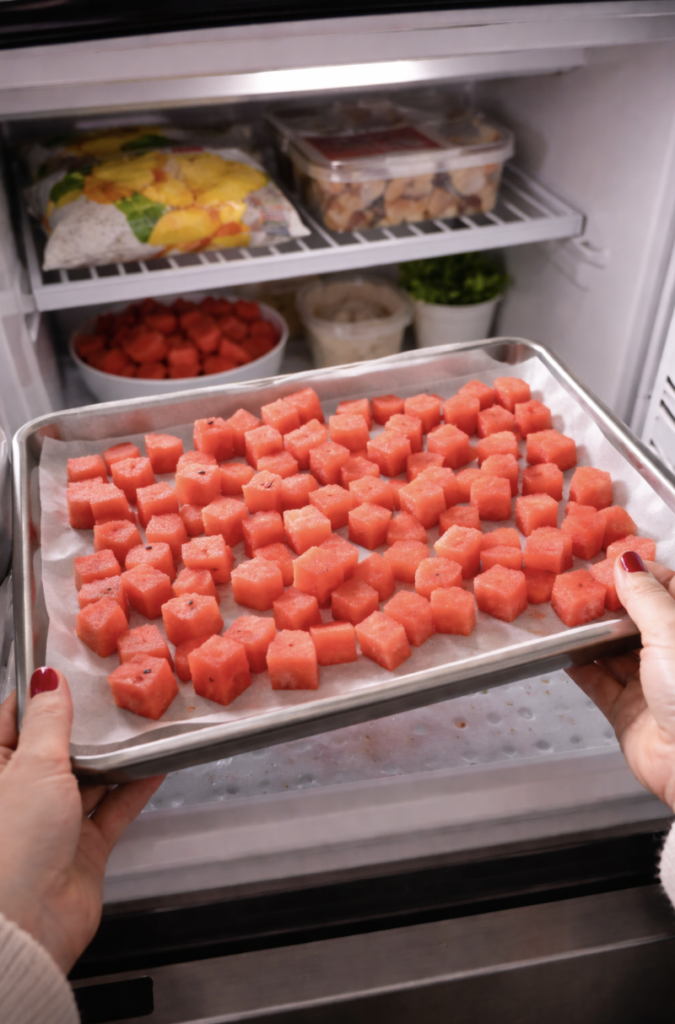
The most important part of this recipe starts long before you blend anything, because the texture of your sorbet depends almost entirely on how well the watermelon is frozen. Begin by cutting your watermelon into small cubes and removing any seeds if needed. Try to make the pieces fairly even in size so they freeze more uniformly later. Once the watermelon is cut, spread the cubes out in a single layer on a tray or plate lined with baking paper, and place them in the freezer until they are completely firm. This usually takes several hours, but overnight is even better. It is important that the fruit is truly frozen solid, because if the watermelon is still soft or only partially chilled, the sorbet will turn out watery instead of thick and creamy. This step may seem simple, but it is what creates that beautiful scoopable texture in the end.
Step 2: Prepare your ingredients and work quickly
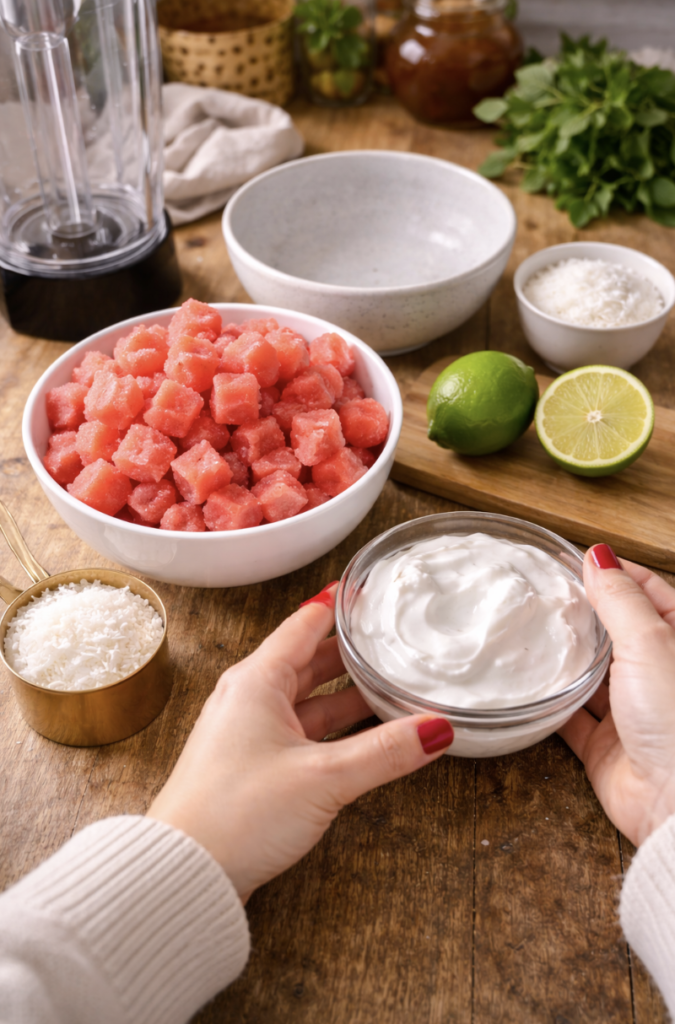
Before blending, take a quiet moment to prepare everything you will need, because once the frozen fruit comes out of the freezer, you want to work fairly quickly so it does not begin to melt too much. Measure out your frozen watermelon, your coconut cream, and the juice of one lime. If you are using shredded coconut as a topping, keep it nearby for later, but do not blend it in unless you want a slightly more textured result. If your coconut cream has been stored in the fridge and feels very thick, that is perfectly fine, but if it is rock hard, let it soften just enough so it can blend more easily. At this stage, it also helps to have your serving bowl ready in the freezer for a few minutes beforehand. This little detail is optional, but it helps the sorbet stay colder for longer once served.
Step 3: Add the ingredients to the blender in the right way
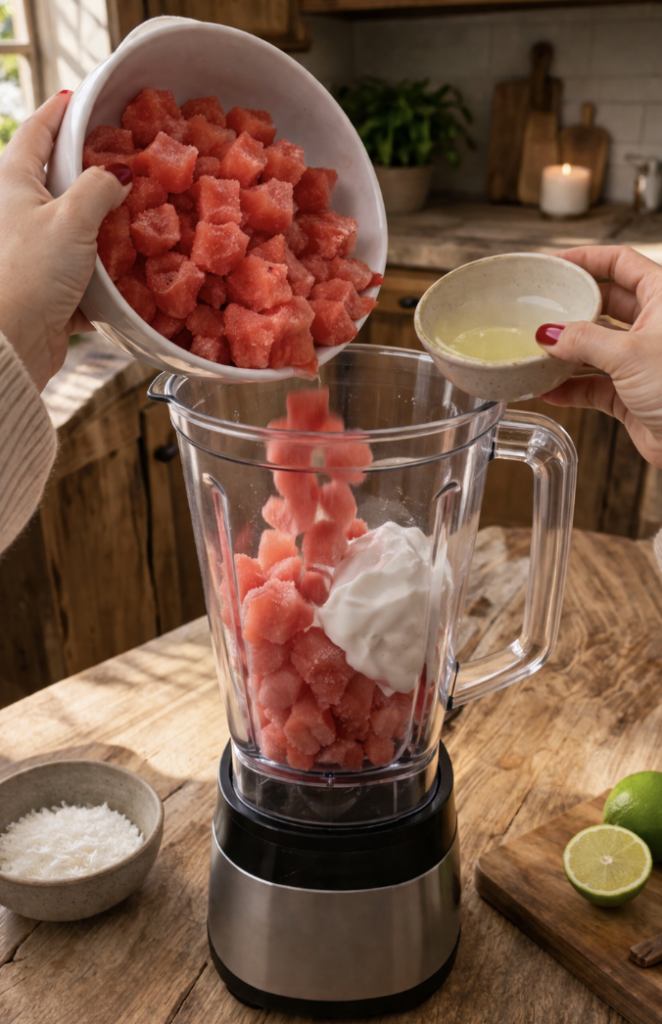
Now place the frozen watermelon into your blender or food processor first. After that, add the coconut cream and the fresh lime juice. The watermelon is the main body of the sorbet and gives it that refreshing, icy fruit base. The coconut cream adds richness and softness, which helps balance the naturally icy texture of frozen watermelon. The lime juice brightens the flavor and keeps it from tasting flat, because watermelon on its own can sometimes become a little muted once frozen. If you want the cleanest, smoothest texture, it is best not to add too many extra ingredients at this point. This recipe works beautifully because it is simple, fresh, and balanced.
Step 4: Blend slowly at first and be patient with the texture
When you begin blending, do not expect everything to turn creamy immediately. At first, the mixture will often look crumbly, chunky, or too thick, and that is completely normal. Start blending slowly, using short pulses if necessary, especially if your blender struggles with frozen fruit. Pause from time to time and scrape down the sides so that everything blends evenly. This stage requires a little patience, because the goal is not to melt the ingredients, but to let them come together gradually into a smooth, cold sorbet. If you rush and add too much liquid too early, the texture can quickly become too thin and slushy. So instead of panicking if it looks dry at first, just keep blending steadily and give it a little time.
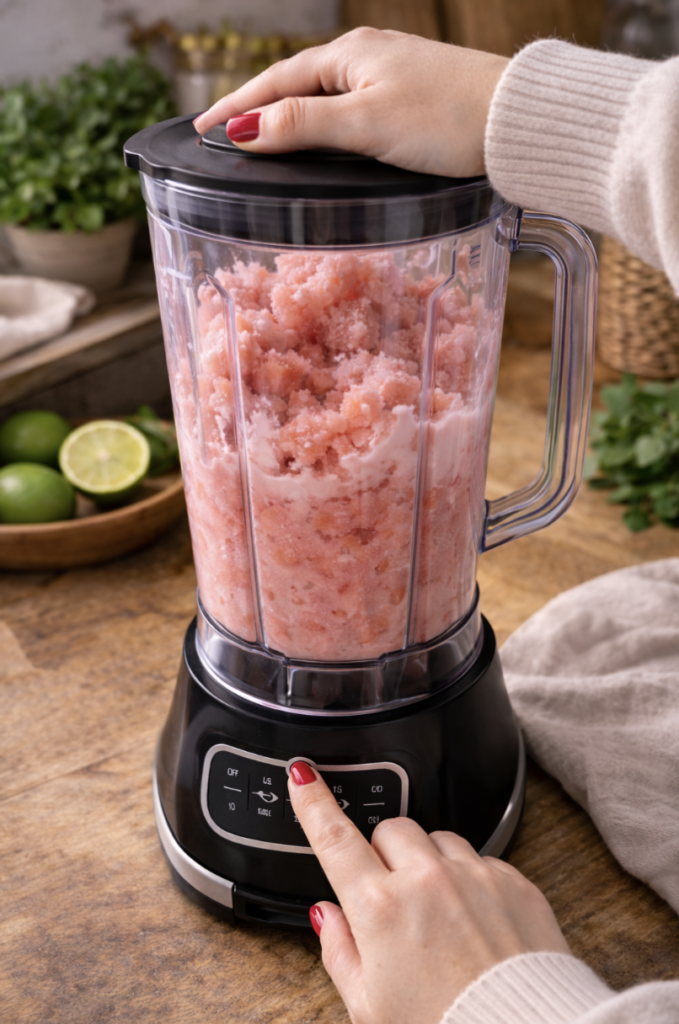
Step 5: Adjust the consistency carefully if needed
As the mixture blends, you should begin to notice it changing from frozen fruit pieces into a thick, soft, creamy sorbet. Ideally, it should look smooth and airy, while still holding its shape. If the mixture seems too thick for your blender to move, you can add a very small spoonful of coconut cream at a time, just enough to help it blend. Try not to add too much, because watermelon already contains a lot of water, and too much extra liquid will make the sorbet loose rather than creamy. On the other hand, if the mixture starts looking too soft, that usually means the fruit has begun to melt too much. In that case, blending should stop as soon as it is smooth. This step is all about balance. You want the final texture to be thick enough to scoop, but soft enough to feel creamy and light.
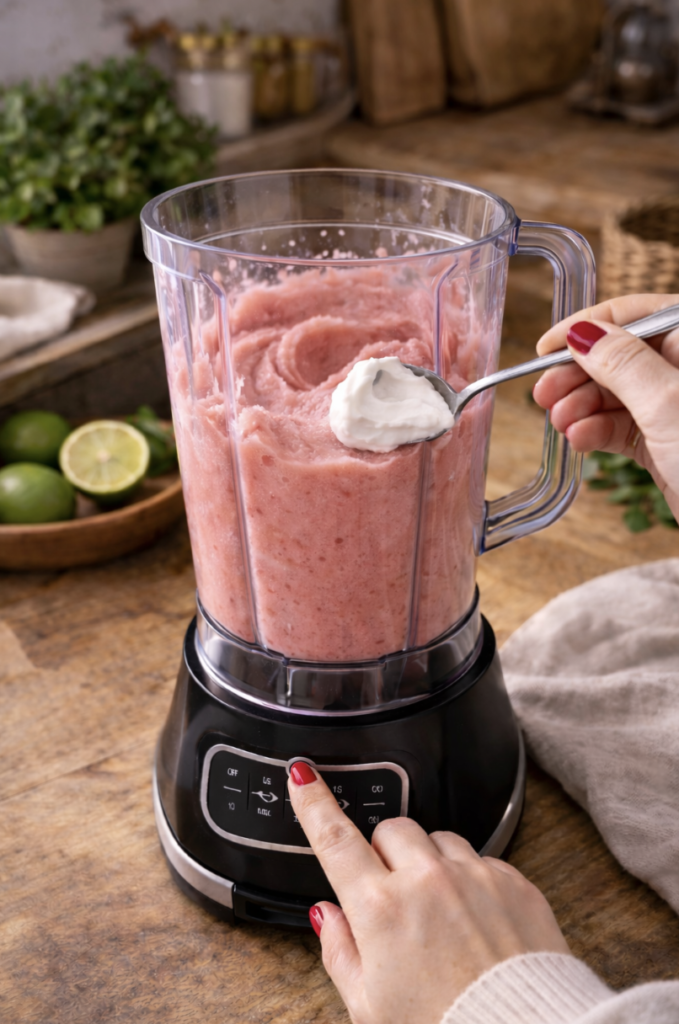
Step 6: Taste the mixture before serving
Once the sorbet is smooth, take a moment to taste it. This is a small but important step, because frozen desserts can taste slightly less sweet once chilled. Depending on the natural sweetness of your watermelon, the flavor may already be perfect, or it may need a tiny adjustment. If it tastes wonderfully fresh and balanced, you can leave it exactly as it is. If it feels a little too mild, you could add a touch more lime juice for brightness. If you prefer it sweeter, you may add a very small amount of sweetener, but only if necessary. The beauty of this recipe is that it can taste clean and naturally fruity without needing much else, so keep the flavors fresh rather than overcomplicating them.
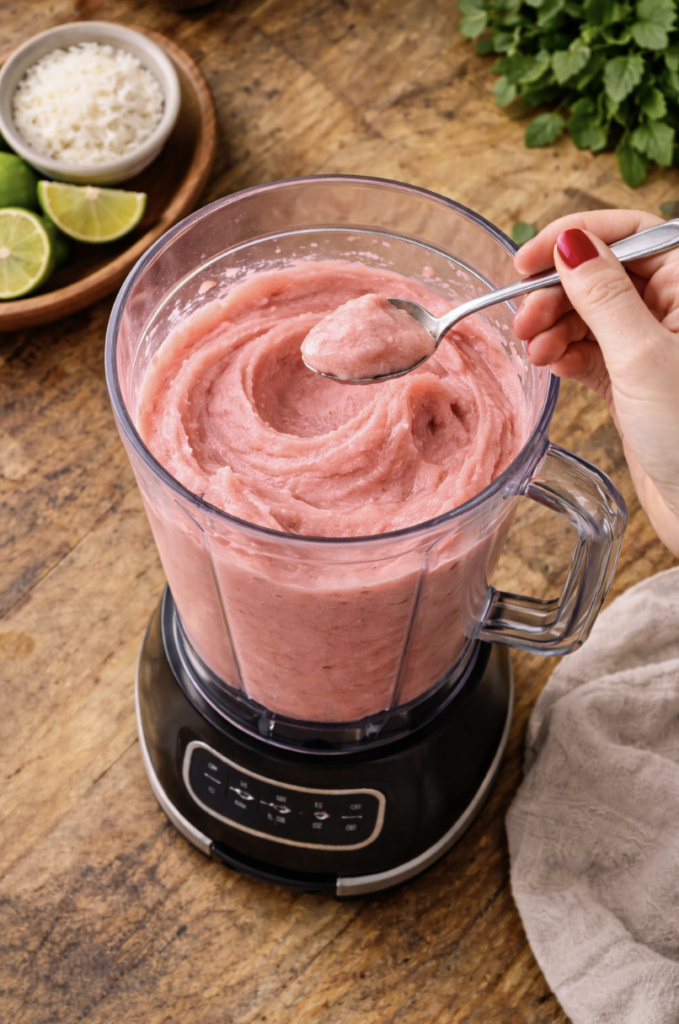
Step 7: Serve immediately for the best soft sorbet texture
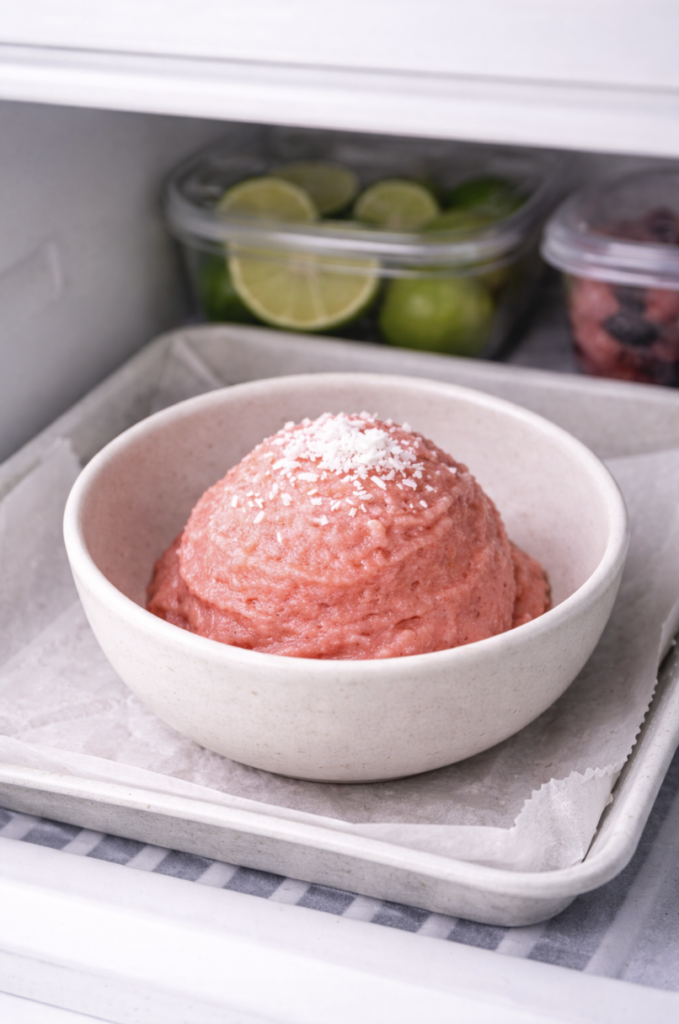
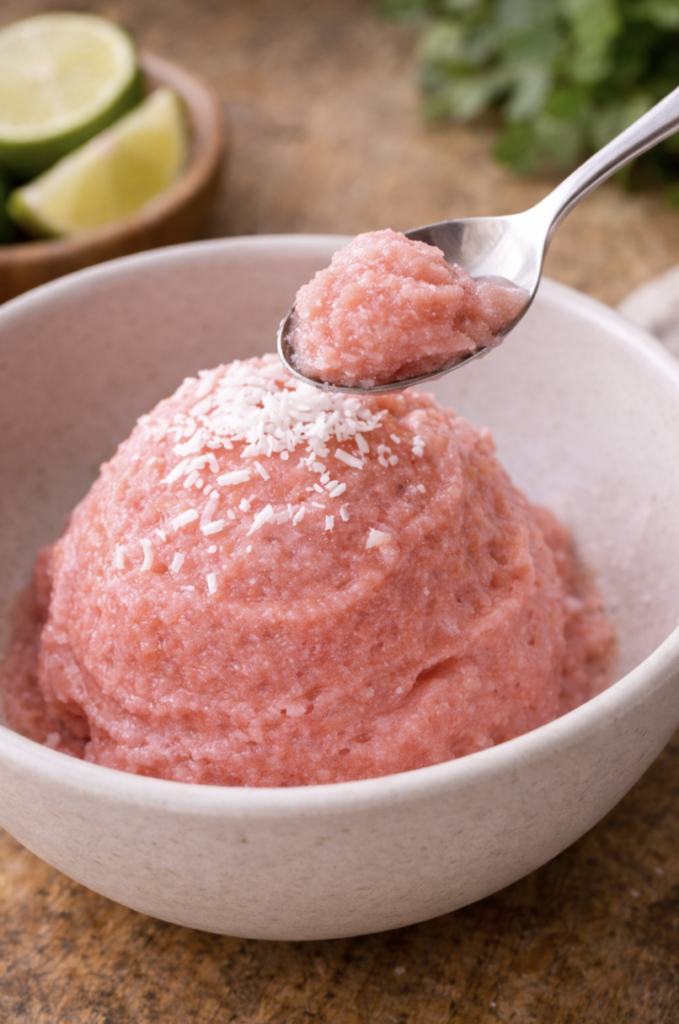
If you want the texture to look like the one in the picture — soft, creamy, and easy to scoop — the best moment to serve it is right after blending. Spoon the sorbet into a chilled bowl and shape it gently if you want a pretty round scoop. At this stage, the texture is at its absolute best: cold, smooth, slightly fluffy, and very refreshing. This is the point where it feels most like a soft homemade sorbet rather than a frozen fruit block. If you like, sprinkle a little shredded coconut on top for a pretty finish and a touch of texture. This step is simple, but it makes the final result feel more special and polished.
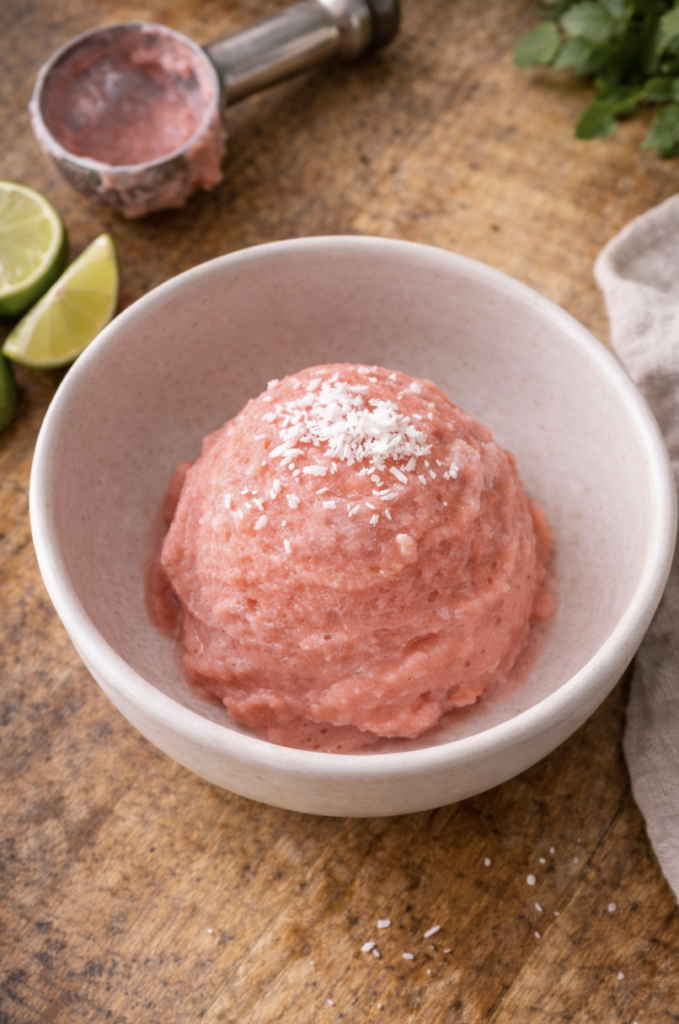
Step 8: If you want it slightly firmer, freeze it briefly — but not too long
If the sorbet feels a little softer than you would like, you can place it in the freezer for about 10 to 20 minutes after blending. This helps it firm up just a little more, which can make it easier to scoop into a neater shape. However, it is very important not to leave it in the freezer for too long, especially not for several hours, because watermelon freezes very hard and can become icy. Unlike traditional ice cream, this recipe does not contain enough fat or sugar to stay soft for a long time in the freezer. So if you want that beautiful creamy sorbet consistency, think of it as something best enjoyed fresh or only briefly chilled after blending.
Step 9: Know what to do if the sorbet becomes too hard later
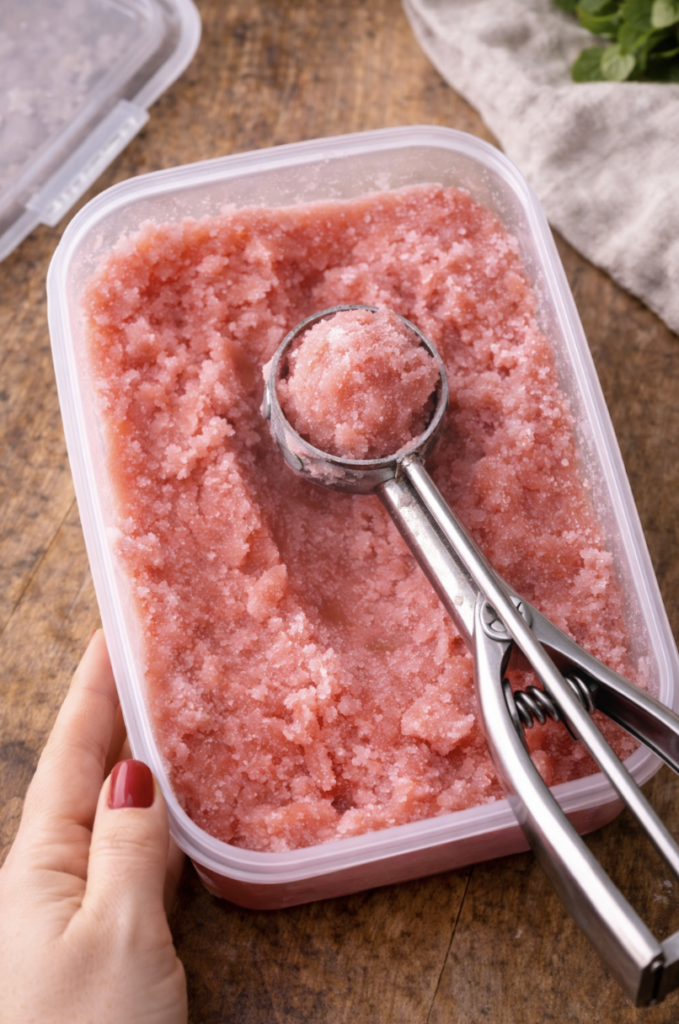
If you do freeze leftovers and they become too firm, do not worry — that is normal for this kind of recipe. Simply take the container out of the freezer and let it sit at room temperature for a few minutes before serving. This will soften it enough to scoop again. You can also blend it briefly once more if you want to bring back a creamier texture. This is helpful to know, because many people think they did something wrong when fruit sorbet freezes solid later, but in reality that is just the natural behavior of frozen fruit. The key is understanding that the best texture comes either immediately after blending or after only a short additional chill.
Step 10: Focus on texture, not just ingredients
What makes this recipe successful is not only the ingredient list, but the way each step is handled. The frozen watermelon must be solid, the blending must be patient, and the final serving time matters more than people often expect. If you keep those details in mind, the result will be fresh, creamy, light, and very beautiful. This is one of those simple recipes that feels effortless once you understand the texture. It is refreshing, naturally fruity, and perfect when you want something that feels soft and indulgent without being heavy.
Total Nutrition (entire batch)
(about 2–3 servings)
- Calories: ~220–260 kcal
- Carbohydrates: ~30–40 g
- Sugar: ~25–35 g
- Fat: ~10–15 g
- Protein: ~1–2 g
👉 Main sources:
- Watermelon → natural sugar
- Coconut cream → healthy fats
Per Serving (≈ 1 bowl)
(based on 3 servings)
- Calories: ~75–90 kcal
- Carbohydrates: ~10–13 g
- Sugar: ~8–12 g
- Fat: ~4–6 g
- Protein: ~0–1 g
This watermelon sorbet is not just refreshing, it also comes with a few natural benefits for your body. Watermelon has a very high water content, which helps keep you hydrated, especially on warm days or after physical activity. It also contains vitamins like vitamin C, which supports your immune system and helps your body recover.
Because the recipe is light and not overly heavy, it is easy to digest and does not leave you feeling sluggish like many rich desserts. The natural sugars from the fruit provide a quick source of energy, which can be helpful when you need a small boost during the day.
The addition of coconut cream brings a small amount of healthy fats, which can help you feel more satisfied after eating, so you are less likely to keep snacking. At the same time, the overall calorie content stays relatively low, making it a lighter dessert option that still feels indulgent.
Another benefit is that it is made from simple, recognizable ingredients, so you avoid unnecessary additives and can enjoy something that feels clean and natural.
If you have ideas for other sorbet flavors or want to see different recipes, feel free to share them in the comments ✨
Leave a Reply