

We all know that uncomfortable feeling when your stomach suddenly seems twice as big as it did in the morning, your jeans feel tighter, and you start wondering what you ate that could possibly have caused it. Bloating is incredibly common, and while occasional bloating is usually nothing to worry about, it can still be frustrating when it keeps showing up after meals or later in the day.
The good news is that you do not necessarily need an expensive supplement, a complicated gut cleanse, or a completely new diet to start feeling better. Sometimes a few small changes to the way you eat, drink, and move can make a noticeable difference.
Here are five simple things you can start doing today.
1. Slow Down When You Eat

This sounds almost too simple, but think about how you normally eat your meals. Maybe you are answering messages while having breakfast, eating lunch at your desk, or finishing dinner in ten minutes because you are hungry and just want to relax afterward.
When we eat quickly, we tend to swallow more air along with our food, which can contribute to that uncomfortable full and bloated feeling afterward. Eating more slowly also gives you more time to chew your food properly and notice when you are comfortably full instead of reaching the point where your stomach feels completely stuffed.
Try putting your fork down occasionally, chewing each bite properly, and giving yourself a little more time to finish your meal. You do not need to count every chew or turn dinner into a mindfulness exercise; simply slowing down a little can be a surprisingly useful place to start.
2. Take a Short Walk After Your Meal

If your normal routine after dinner is moving directly from the dining table to the couch, try taking a short walk first.
You do not need to turn it into a workout or walk several miles. Even a gentle 10- or 15-minute walk after eating can encourage movement through your digestive system, and many people find that they feel much more comfortable than when they immediately sit or lie down after a large meal.
This is also one of the easiest habits to maintain because you can attach it to something you already do every day. Finish dinner, put on your shoes, walk around the neighborhood for a few minutes, and then come home. It is simple, free, and does not require another product sitting in your kitchen cabinet.
3. Increase Fiber Slowly, Not Overnight
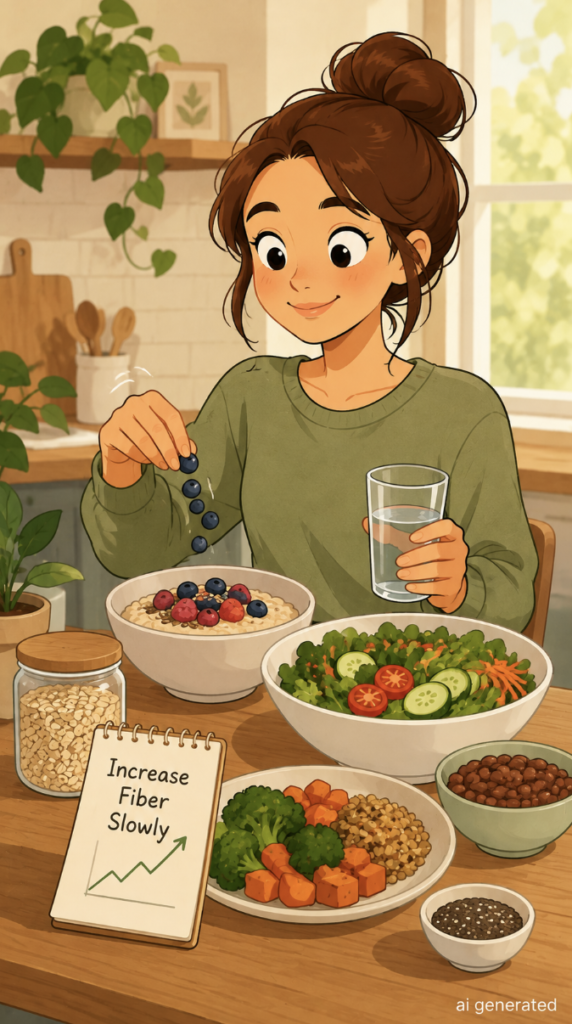
Fiber is incredibly important for digestive health, but there is a small catch that people sometimes discover the hard way: suddenly eating dramatically more fiber can actually leave you feeling more bloated at first.
If you normally eat relatively little fiber and then suddenly fill your day with huge salads, beans, lentils, chia seeds, high-fiber cereals, and fiber supplements, your digestive system may need some time to adjust.
Instead of trying to completely transform your diet overnight, gradually introduce more fiber-rich foods and see how your body responds. You might add some oats or berries to breakfast, include vegetables with lunch, or add a small serving of beans to dinner rather than trying to hit a huge fiber target immediately.
And remember to drink enough fluids as you increase your fiber intake, because fiber and fluids generally work much better together when it comes to keeping digestion regular.
4. Pay Attention to Your Personal Bloating Triggers

There is no single list of foods that makes everyone bloated, which is why blindly removing ten different foods from your diet is usually not the best starting point.
Instead, become a little more curious about what happens in your own body.
Maybe you consistently feel bloated after drinking several carbonated drinks, eating a very large meal, consuming lots of sugar alcohols in “sugar-free” products, or eating certain foods that your digestive system simply does not tolerate particularly well.
For a week or two, make a simple note of what you ate and when the bloating appeared. You do not need a complicated spreadsheet or calorie-tracking app; a quick note on your phone can be enough to reveal patterns you had never noticed before.
The goal is not to become afraid of food or start eliminating everything that could theoretically cause gas. It is simply to identify whether there are obvious, repeatable triggers that you can adjust without unnecessarily restricting your diet.
5. Give Your Stomach a Break From Constantly Eating
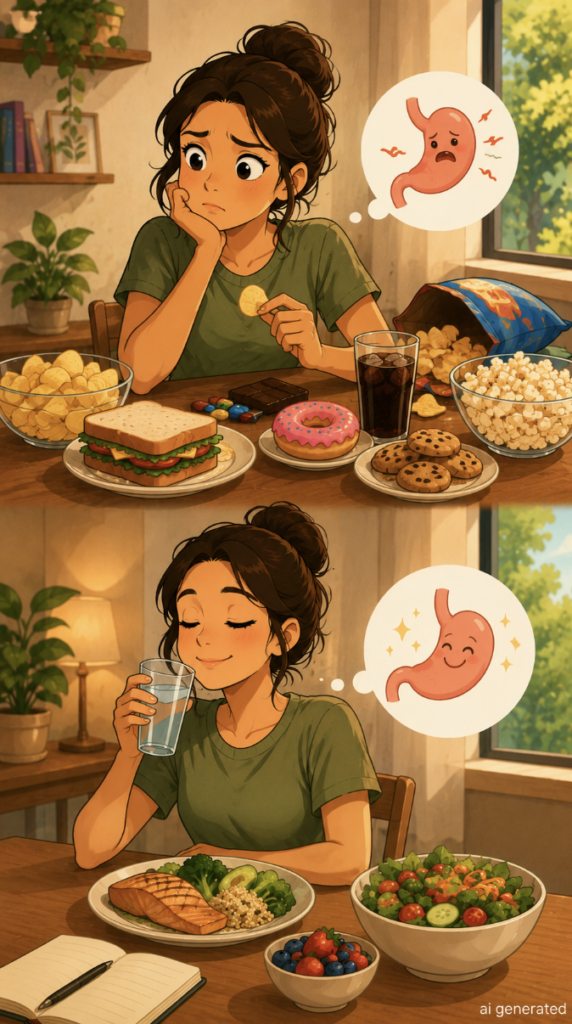
If you are eating breakfast, grabbing a snack an hour later, having lunch, snacking throughout the afternoon, eating dinner, and then continuing to snack throughout the evening, your digestive system is processing food for a large portion of the day.
You do not need to start fasting for extreme periods or skip meals to change this.
Instead, pay attention to whether you are actually hungry when you reach for another snack, or whether you are simply eating because food is available, you are bored, or it has become part of your routine. Eating satisfying meals and allowing some natural space between them may help you better understand your hunger and digestion.
At the same time, do not force yourself to stay hungry simply because you think your gut “needs a break.” Your body still needs enough food and nutrients, and the goal here is not restriction. It is simply becoming more aware of constant, mindless snacking if that happens to be part of your routine.
Start Small
When your stomach feels bloated, it is tempting to search for one magical food, supplement, detox, or morning routine that will fix everything immediately. In reality, your digestive system is more complicated than that, and what works wonderfully for one person may make very little difference for another.
Start with the boring basics instead. Eat a little slower, take a short walk after meals, increase fiber gradually, drink enough fluids, and pay attention to the foods and habits that consistently seem to trigger your symptoms.
You certainly do not need to implement all five tips perfectly from tomorrow morning. Pick one or two that seem realistic, try them consistently, and see how your body responds. Small changes that actually fit into your everyday life are usually much easier to stick with than trying to completely change the way you eat overnight.
And if you are wondering what to do next, I have put together a free Gut Health Guide that makes getting started even easier. Inside, you will find a simple step-by-step approach to supporting your gut, practical tips and tricks you can actually use in everyday life, and easy gut-friendly recipes designed to help you turn all of this information into real habits. Instead of endlessly searching for the next gut health hack, you will have everything organized in one place so you can focus on the small changes that can actually make a difference.
Get my free Gut Health Guide here and start giving your gut a little more of the attention it deserves.
And remember, if your bloating is persistent, unusually painful, getting worse, or comes with symptoms such as unexplained weight loss, vomiting, blood in your stool, significant changes in bowel habits, or other symptoms that concern you, speak with a qualified healthcare professional rather than trying to solve everything through dietary changes on your own.
Your gut does not need perfection. Sometimes it just needs a little more attention.
Leave a Reply