
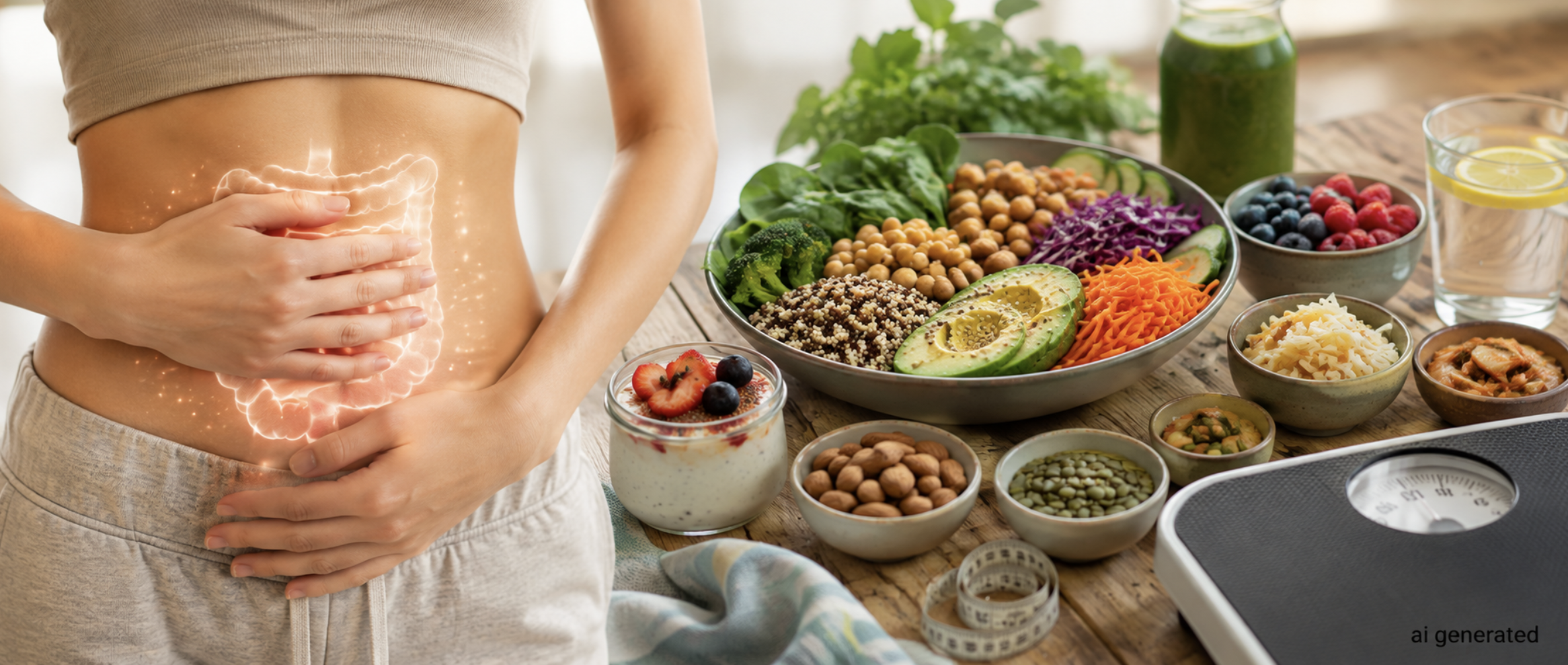
For a long time, I thought managing my weight was mainly about how much I ate. Whenever I felt like I had gained a little weight or my clothes felt tighter, my first reaction was usually to reduce my portions, skip snacks, or choose the lowest-calorie option I could find. I never really stopped to think about my digestion because, in my mind, my stomach and my weight were two completely different things.
Over time, though, I started noticing a pattern. There were days when I ate relatively little but still felt heavy, bloated, and uncomfortable, while on other days I ate larger, more balanced meals and actually felt much better. My energy was different too. When my meals were small and not particularly nutritious, I would often feel hungry again surprisingly quickly, and by the afternoon I was thinking about snacks or craving something sweet.
That was one of the reasons I became interested in gut health in the first place.
We Started Looking Beyond Calories
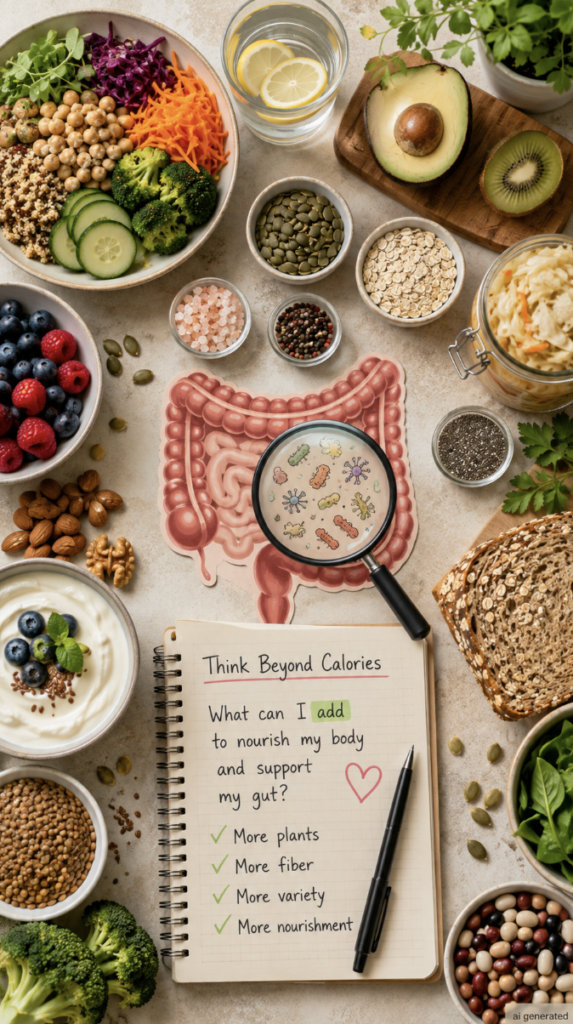
Instead of only looking at calories, I began paying more attention to what was actually on my plate. I started eating oatmeal with berries and chia seeds more often, adding vegetables to meals that previously contained very few, and including foods such as beans, lentils, whole grains, nuts, seeds, fruit, and yogurt throughout the week.
The surprising part was that I didn’t feel like I was “dieting.”
Actually, it felt like the opposite. My meals became bigger and more colorful, but they also kept me satisfied for much longer. I wasn’t constantly waiting for my next meal, and I slowly stopped seeing hunger as something I needed to fight.
Fiber became especially interesting to me because many of the foods I was naturally eating more of—oats, berries, vegetables, legumes, nuts, and seeds—contained plenty of it. Fiber supports normal digestion, and certain types can also be fermented by bacteria living in the gut. I increased it gradually and paid more attention to drinking enough water, because suddenly adding huge amounts of fiber isn’t always comfortable.
This wasn’t an overnight transformation, but after a while my digestion simply felt more predictable.
My Mom Made Me Look at It Even More Closely
Around the same time, I had also seen my mom struggle with similar issues. She sometimes felt bloated and uncomfortable and had fallen into the same trap I had: whenever she wanted to lose weight, she assumed the answer was simply eating less.
Seeing the same pattern in someone close to me made me even more curious.
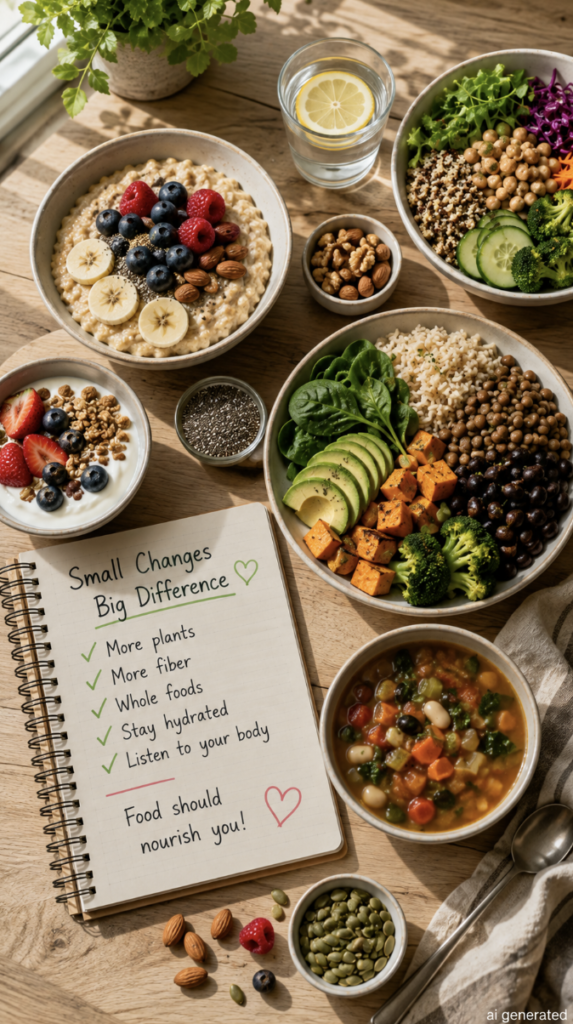
We both started focusing less on restriction and more on what we could add to our meals. Sometimes that was an extra vegetable with dinner, berries at breakfast, lentils in a soup, or nuts with a piece of fruit. These were incredibly ordinary changes, but that was exactly what I liked about them—they were realistic enough to become part of everyday life.
I Also Stopped Confusing Bloating With Weight Gain
This was probably one of the biggest mindset changes for me.
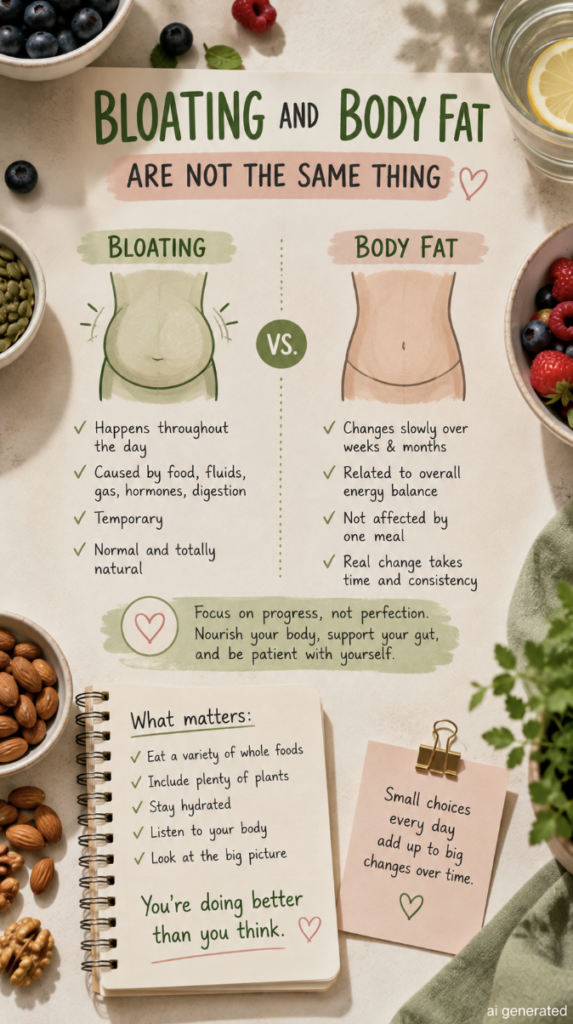
I used to have days when my stomach looked flatter in the morning and noticeably fuller by evening, and I would immediately think I had eaten too much. Once I understood digestion better, I realized how misleading that can be.
We eat food, drink fluids, produce gas, and naturally have digestive contents moving through our bodies. All of that can change how our stomach looks and feels throughout the day. Feeling bloated doesn’t automatically mean you’ve gained body fat.
Once I stopped treating every temporary change in my stomach as weight gain, I became much more relaxed around food.
So Does Gut Health Really Affect Weight?
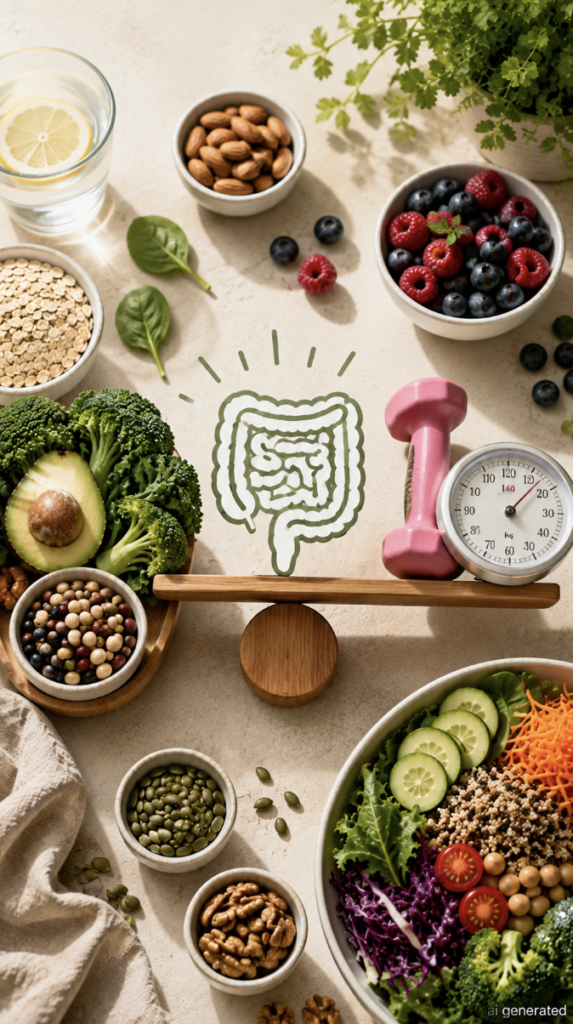
The relationship between gut health and body weight is fascinating, but I don’t think it should be turned into another miracle weight-loss promise. Research has found connections between the gut microbiome, metabolism, and obesity, but scientists are still trying to understand exactly how these relationships work.
Weight itself is influenced by many factors, including how much energy we consume and use, genetics, activity, sleep, hormones, medications, health conditions, and our overall lifestyle. There isn’t one “good bacteria” that suddenly makes body fat disappear.
For me, the more useful connection is much more practical.
When I focus on foods that support a varied, fiber-rich diet, my meals tend to be more satisfying. When I’m satisfied after breakfast or lunch, I’m less likely to spend the next few hours thinking about food. When my digestion feels comfortable, I feel better in my body. And when healthy eating doesn’t feel like constant restriction, I’m much more likely to continue doing it.
That has been far more valuable to me than any short-term diet.
What I Do Differently Now
Today I don’t try to make every meal perfect. Some mornings I have oatmeal and berries; other days breakfast looks completely different. I try to eat plenty of different plant foods throughout the week, include fiber-rich foods regularly, drink enough water, and enjoy fermented foods such as yogurt when they work for me.
I also eat foods simply because I enjoy them.
That’s probably the biggest difference between how I approached weight in the past and how I think about it now. I used to believe healthy eating meant having enough discipline to constantly say no. Now I think much more about what I can add and what habits I can realistically maintain.
My mom’s experience reinforced that lesson, but I also had to learn it for myself.
Gut health hasn’t become some magical solution that controls my weight, and I don’t expect it to be. What it has done is teach me to pay attention to my body in a completely different way. Instead of immediately asking, “How can I eat less?”, I now ask, “How can I make this meal more nourishing, satisfying, and enjoyable?”
That small change in thinking has probably influenced my relationship with food more than any diet I’ve ever tried.
Leave a Reply