
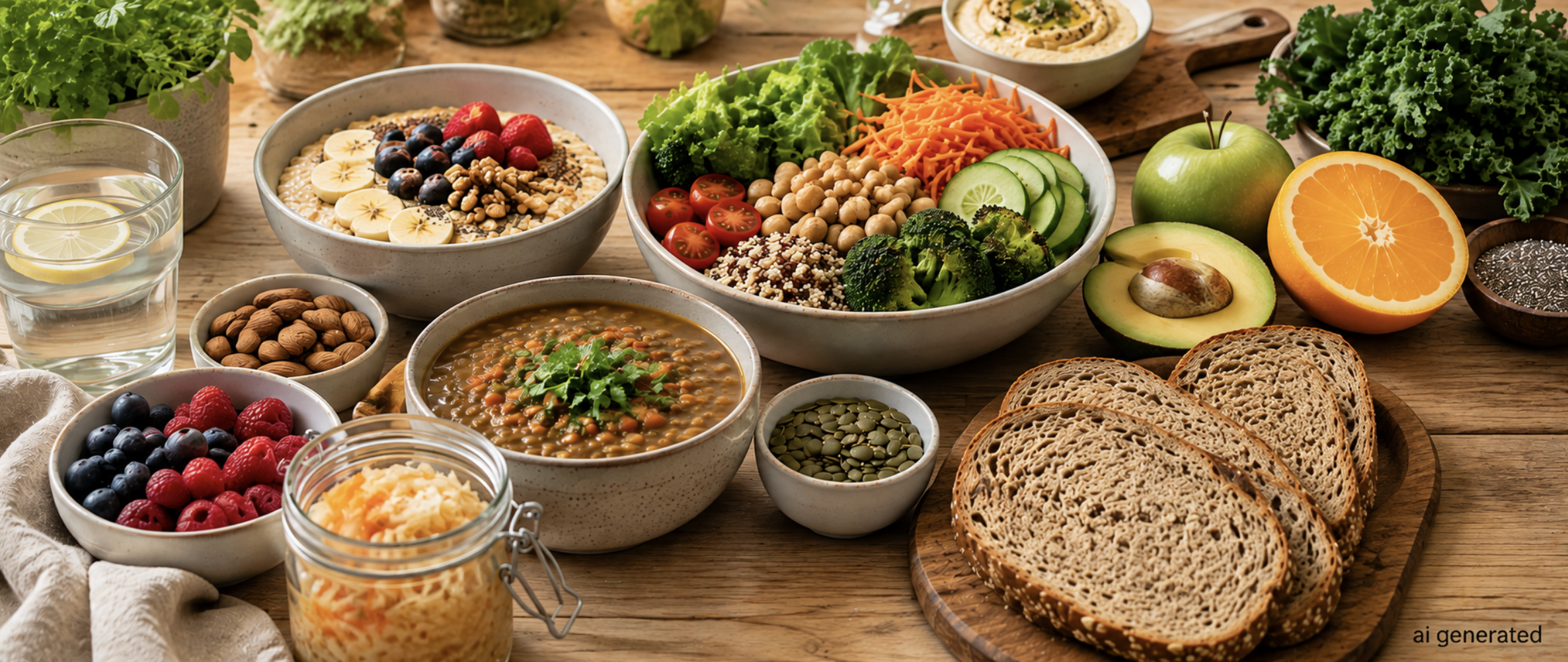
For a long time, gut health wasn’t something I thought much about. I knew that eating vegetables was good for you and that fiber was important, but I never really understood how much our digestive health can influence the way we feel in everyday life. That changed when my mom started struggling with her digestion. She often felt bloated and uncomfortably full after meals, and her digestion became increasingly unpredictable. Some days were completely fine, while on others even a normal meal could leave her feeling uncomfortable for hours. Seeing how much this affected her made me realize that digestive problems aren’t always something you can simply ignore.
What was especially frustrating was that there didn’t seem to be one obvious reason for it. Like many people, we initially thought there might be a particular food she needed to avoid or a supplement she needed to take. When you start searching online, you quickly find countless products promising to “heal your gut,” eliminate bloating, or completely reset your digestive system. But the more I learned about gut health, the more I realized that we didn’t need to make everything complicated. Instead of looking for a miracle solution, we started paying more attention to the small things she was eating every day.
We Started With Simple Changes
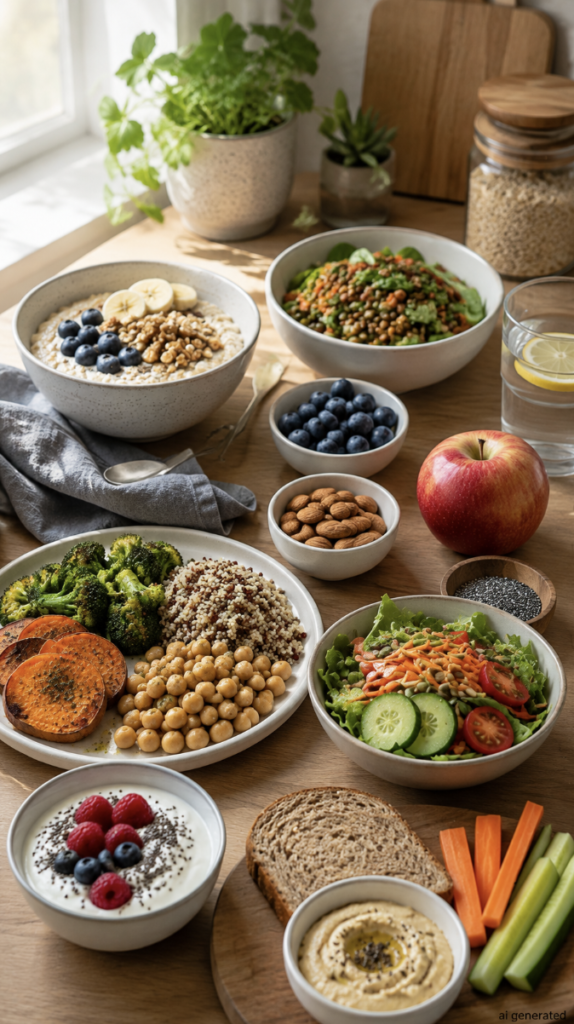
Rather than putting my mom on a restrictive diet, we focused on adding more nutritious foods to meals she already enjoyed. Breakfast was one of the easiest places to start. Greek yogurt with berries, oats, and a little chia seed became a simple option, while oatmeal with banana and nuts was another. At lunch and dinner, the goal wasn’t to create completely new meals but simply to add more vegetables, whole grains, beans, lentils, or other fiber-rich foods when they worked for her.
This approach felt much more natural because she didn’t have to constantly think about foods she wasn’t “allowed” to eat. Instead, we started asking what we could add to a meal to make it more nutritious and varied. An extra vegetable with dinner, some berries at breakfast, an apple with nuts as a snack, or a small portion of lentils with lunch might not sound like a major lifestyle change, but those small choices were much easier to maintain than an extreme diet.
Fiber Became a Big Part of the Conversation
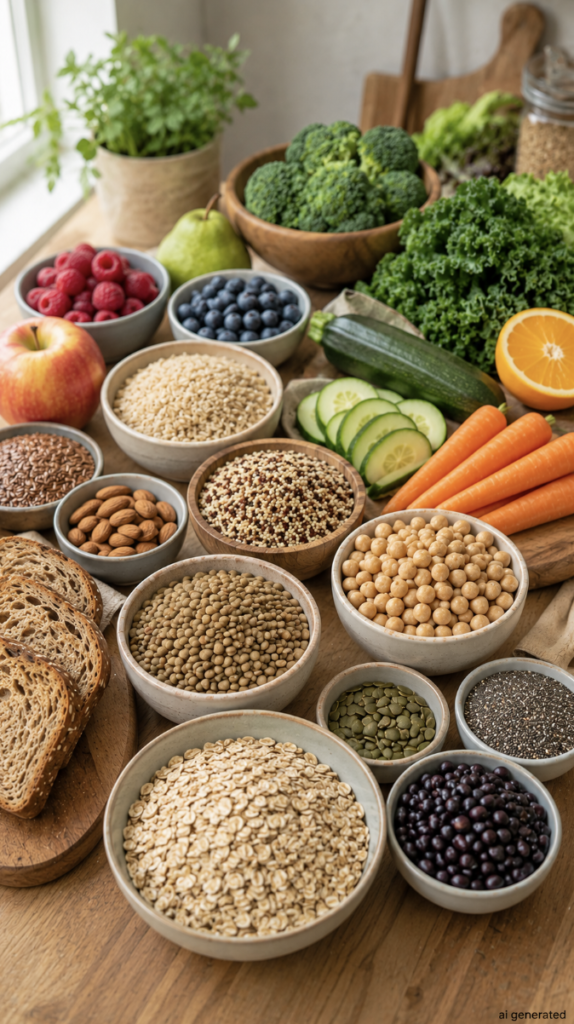
One of the most important things I learned during this time was how important fiber is for a balanced diet and normal digestion. Foods such as oats, fruits, vegetables, beans, lentils, nuts, seeds, and whole grains naturally provide different types of fiber, and some fibers can also be used by microorganisms living in our gut.
At the same time, we learned that suddenly eating as much fiber as possible isn’t necessarily a good idea. If someone isn’t used to eating many fiber-rich foods, dramatically increasing their intake overnight can sometimes lead to more gas and bloating. That was why we took a gradual approach with my mom, introducing more fiber-rich foods little by little while also making sure she was drinking enough water.
This taught me something that I still think is incredibly important: gut health shouldn’t be a race. You don’t have to completely transform your diet in a week. Giving your body time to adjust while slowly building better habits can be a much more realistic approach.
Variety Became More Important Than Perfection
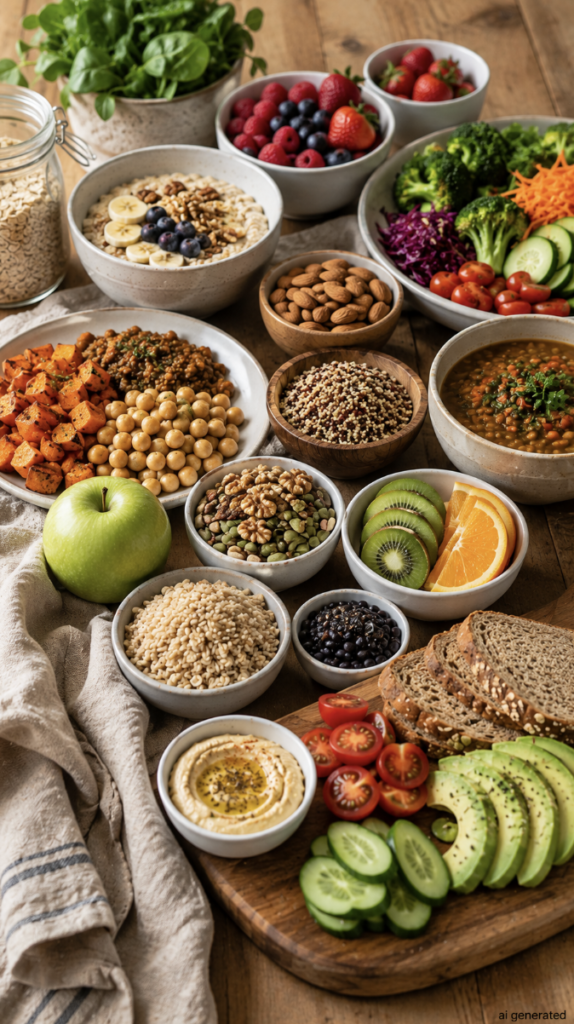
As I learned more about nutrition, I also stopped looking for one perfect “gut health food.” There isn’t one fruit, vegetable, seed, or fermented food that you need to eat every single day. What became much more important to me was variety.
Instead of having exactly the same breakfast every morning, we started rotating different foods. Blueberries one day, banana or kiwi another. Broccoli with one dinner, carrots, spinach, peppers, or zucchini with another. Chickpeas could be added to one meal and lentils to another. Nuts and seeds were also easy to rotate between meals and snacks.
Fermented foods became another interesting addition. Foods such as yogurt and kefir can contain live cultures, while fermented vegetables such as kimchi and sauerkraut can also be incorporated into meals if you enjoy and tolerate them. Again, the goal was never to eat every “gut-friendly” food every day. It was simply about creating more variety over time.
My Mom Changed the Way I Look at Food
Watching my mom become more intentional about her diet changed my own relationship with healthy eating as well. Before that, I often thought eating healthier meant removing things: less sugar, fewer processed foods, fewer snacks, fewer carbohydrates. But through her experience, I started thinking much more about what I could add instead.
That shift made healthy eating feel far less restrictive. Instead of worrying about creating the perfect meal, I started looking at my plate and thinking about whether I could add some fruit, vegetables, whole grains, nuts, seeds, or another plant food. Over time, these little decisions became normal rather than something that required constant effort.
It also made me realize that healthy eating can still include foods we simply enjoy. Neither my mom nor I eat perfectly, and I don’t think that should be the goal. One dessert, takeaway meal, or less nutritious snack doesn’t suddenly undo everything else you eat. What matters much more is the overall pattern you create over weeks, months, and years.
Why Gut Health Became Personal to Me
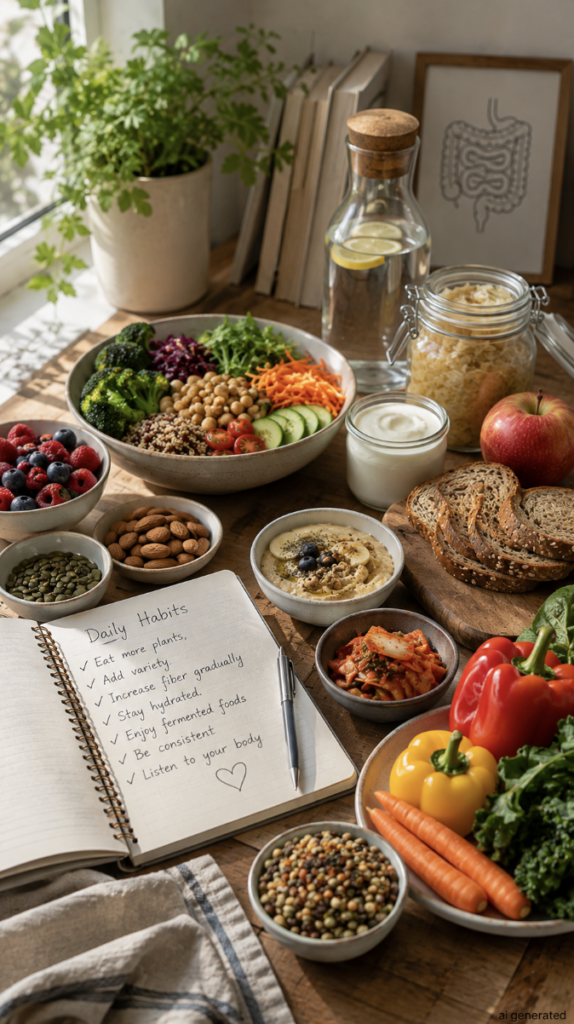
My mom’s experience is one of the main reasons I became so interested in gut health. Seeing someone close to me deal with digestive discomfort made me want to understand the subject beyond the headlines and wellness trends. I wanted to understand why fiber matters, why different plant foods matter, what fermented foods can offer, and why our digestive system is connected to so many other processes in the body.
It also taught me not to expect one food or supplement to solve everything. Gut health is individual, and what works well for one person may not feel good for another. That’s why I now prefer a much simpler philosophy: eat a varied diet, include plenty of plant foods, increase fiber gradually, stay hydrated, enjoy fermented foods if they work for you, and build habits you can actually maintain.
For me, that is what gut health is really about. It isn’t about following the latest detox or creating a perfect diet. It’s about making small, realistic choices that gradually become part of your everyday life. My mom’s experience showed me how powerful that change in mindset can be, and it completely changed the way I think about food today.
Better gut health doesn’t have to begin with a dramatic transformation. Sometimes it simply begins with paying a little more attention to what’s on your plate and making one better choice at a time.
Leave a Reply