
For a long time, I didn’t really think much about gut health. I mostly paid attention to what I ate in terms of calories, protein, or whether something was considered “healthy.” But over time, I started noticing how much my digestion affected the rest of my day. When my stomach felt good, I generally felt lighter, more comfortable, and more energized.
That’s when I started paying more attention to the foods I was eating—not by following a strict diet, but by adding more simple, nourishing foods to my everyday meals.
Why I Started Paying More Attention to Gut Health
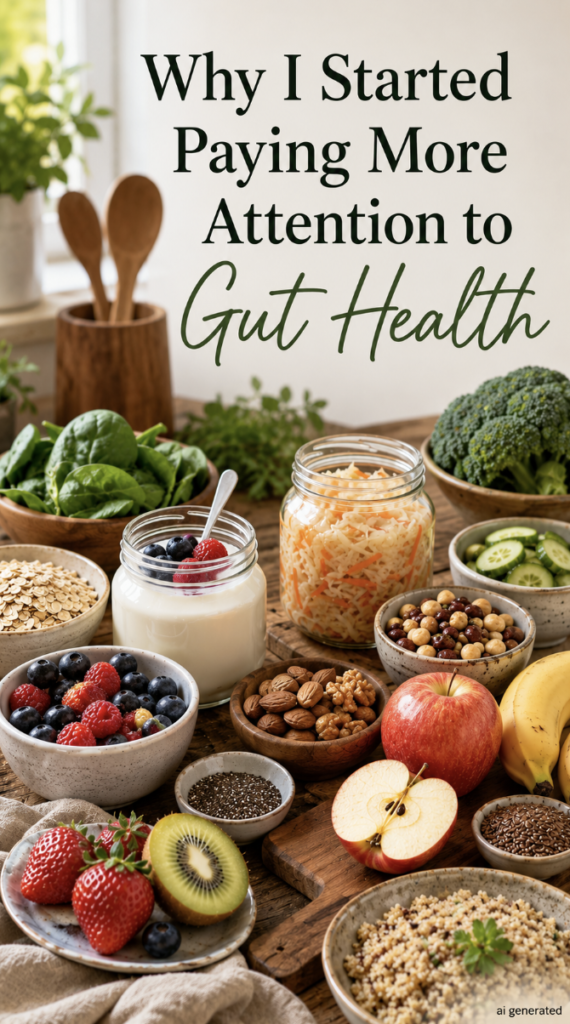
Our digestive system is home to trillions of microorganisms that make up what we call the gut microbiome. What we eat can influence this little ecosystem, which is one reason variety is so important.
For me, the biggest change was realizing that I didn’t need special “gut health” products. Many of the foods that support a balanced diet are actually incredibly simple: fruit, vegetables, oats, yogurt, beans, nuts, seeds, and whole grains.
Instead of completely changing the way I eat, I started adding more of these foods to meals I already enjoyed.
The Foods I Like to Include
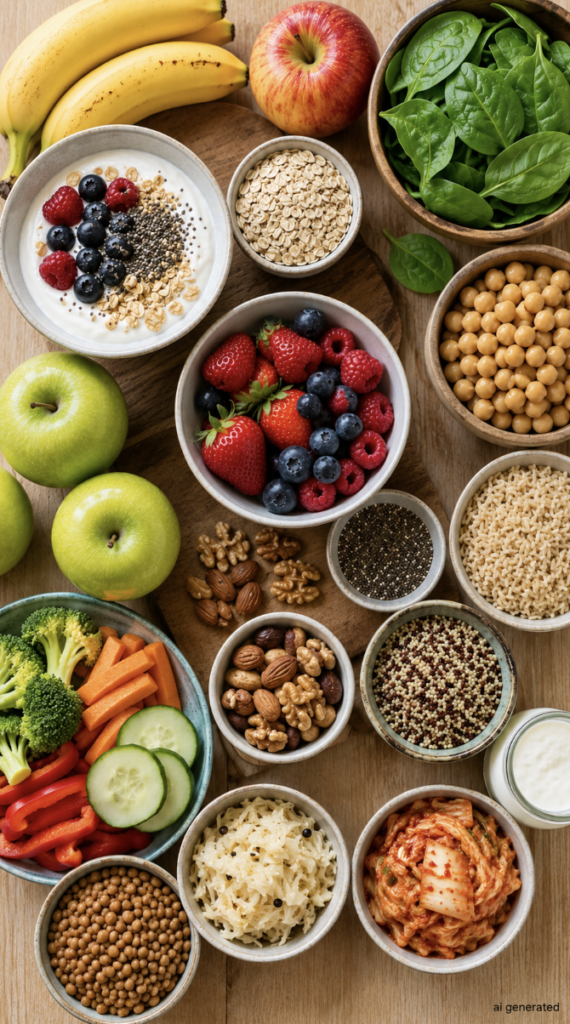
One of my favorite breakfasts is Greek yogurt with berries, oats, and chia seeds. It takes only a few minutes, but it gives me a combination of protein and fiber. When I buy yogurt, I usually look for one that contains live cultures and isn’t loaded with added sugar.
Oats have also become something I always keep at home. They contain soluble fiber, including beta-glucan, and they’re so easy to use. I make oatmeal, overnight oats, or simply stir a few spoonfuls into yogurt.
Fruit is another easy way I add more variety. Bananas, apples, blueberries, strawberries, raspberries, and kiwi are some of my favorites. I try not to eat exactly the same fruit every day because different plant foods provide different fibers and plant compounds.
The same goes for vegetables. I don’t worry about creating a perfect plate every single time. I simply try to add vegetables wherever they make sense. Broccoli with dinner, spinach in a smoothie, tomatoes in a salad, carrots as a snack, or zucchini roasted alongside another meal all count.
Fiber Made the Biggest Difference to My Approach
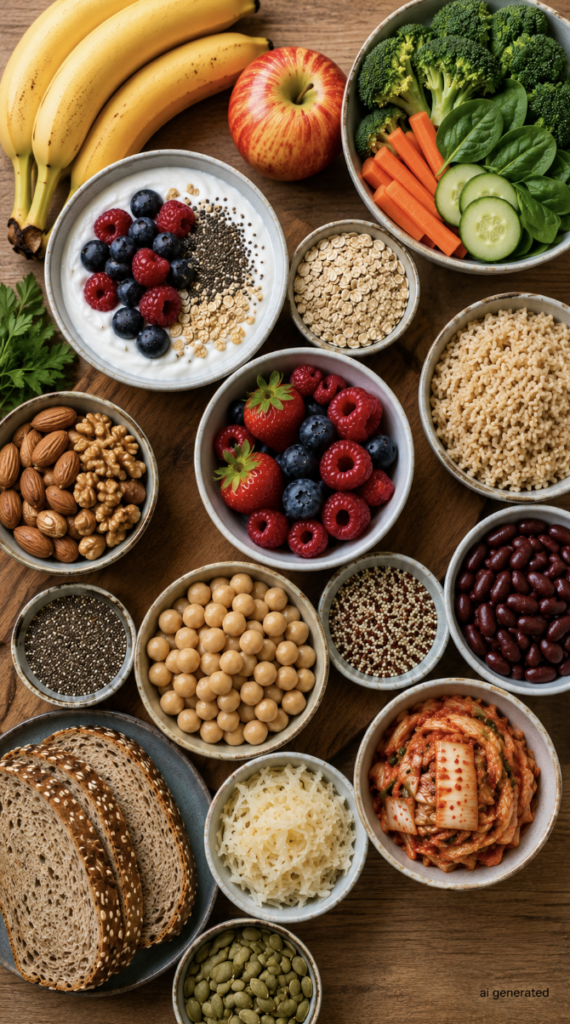
Once I started learning more about digestion, I realized how important fiber-rich foods are.
Besides fruits and vegetables, I now try to include beans, lentils, chickpeas, whole grains, chia seeds, flaxseed, and nuts regularly.
A lentil soup, chickpea salad, oatmeal with chia seeds, or an apple with almond butter doesn’t feel like “health food” to me. It’s simply normal food that happens to add more fiber and variety to my day.
One thing I learned quickly, though, is that increasing fiber too fast isn’t always comfortable. If you normally eat very little fiber, suddenly eating huge portions of beans, vegetables, and chia seeds can leave you feeling bloated. I find it much easier to make gradual changes and remember to drink enough water throughout the day.
I Also Like Adding Fermented Foods
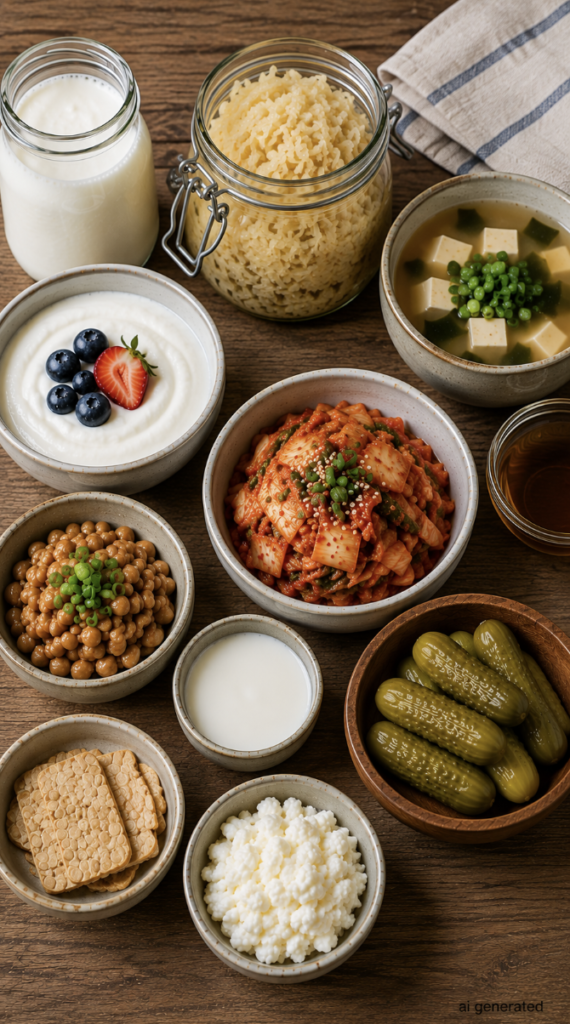
Another category I enjoy is fermented foods.
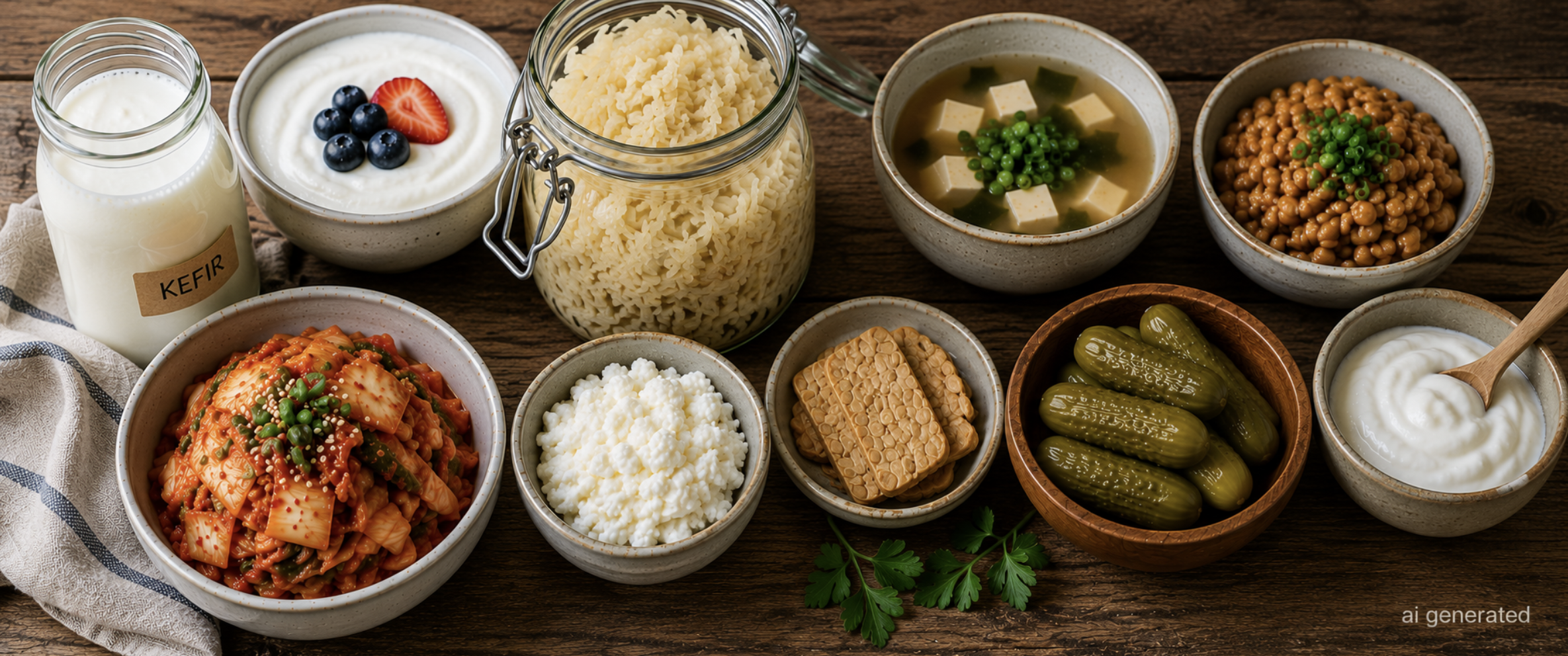
Foods such as yogurt, kefir, kimchi, and sauerkraut can contain live microorganisms. I don’t eat them at every meal, but I like having a few options in the fridge.
Sometimes that simply means yogurt for breakfast or a little sauerkraut alongside lunch. It doesn’t have to be complicated.
Variety Is More Important Than Perfection
This is probably the biggest thing I’ve taken away from learning about gut health.
I don’t think there is one magical food that suddenly fixes your digestion. Instead, I try to look at what I’m eating across the entire week.
Maybe breakfast has oats, blueberries, and chia seeds. Lunch includes chickpeas, tomatoes, cucumber, and greens. Later I’ll have an apple with nuts, and dinner might include brown rice with broccoli and other vegetables.
Little by little, those different foods add up.
And I still eat foods simply because I enjoy them. Supporting gut health doesn’t mean every meal has to be perfect or that desserts, takeout, or your favorite snacks suddenly need to disappear.
Want a Little More Support?
If you’d like to take the next step, I also created a completely free Gut Health Guide that brings everything together in one simple place.
This guide is especially personal to me because it’s not just something I created for a website. The approach in it has helped my own mom, as well as many other women, make gut-friendly eating feel simpler and more manageable in everyday life. Seeing that is one of the reasons I wanted to make the guide available for free.
Inside, I share practical tips, simple food ideas, and the small habits that can make it easier to support your gut without turning your entire routine upside down.
If you’re not sure where to start, download my free Gut Health Guide and take it one small step at a time.
Leave a Reply