

For as long as I can remember, I struggled with bloating after meals. I have a relatively small frame, so the difference could be pretty extreme. I would wake up in the morning with a normal-looking stomach, eat regular meals throughout the day, and by the evening my stomach could be so swollen that I looked several months pregnant. It affected my confidence, but the uncomfortable feeling was even worse because my stomach often felt tight, heavy and incredibly full, even when I had not eaten that much.
For years, I was convinced that food had to be the problem, so I tried almost everything I could think of. I experimented with gluten-free and lactose-free diets, looked into low-FODMAP eating, researched IBS and SIBO, and tried probiotics and digestive enzymes. Every time I discovered something new, I thought, Maybe this is finally the answer, but the bloating always seemed to come back.
I Was Always Looking at What I Ate

Eventually, eating started to feel like a detective game. If I became bloated after lunch, I would immediately think about everything I had eaten and wonder whether the bread, dairy, vegetables or something else had caused it. The confusing part was that there was never one obvious trigger. Sometimes I could eat a certain food and feel completely fine, while another time I would eat a simple meal and still become incredibly bloated.
Looking back, I realized that I had spent years asking the same question: “Which food is causing this?” I never really considered that food might not be the only thing involved.
Then I Discovered Something Called APD
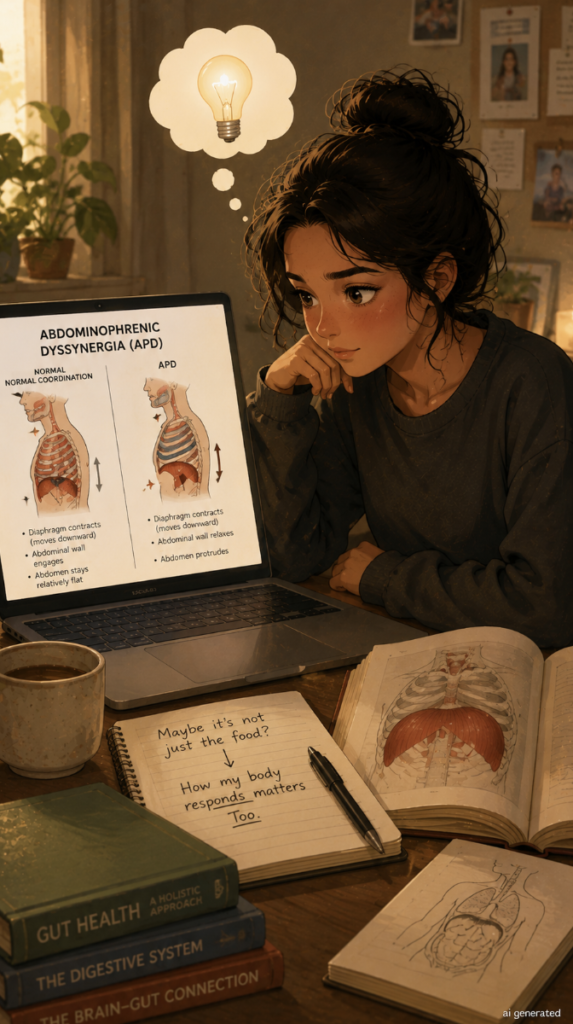
Eventually, I came across something I had never heard of before: abdominophrenic dyssynergia, or APD.
In simple terms, APD involves the diaphragm and abdominal wall not coordinating as expected, which can contribute to visible abdominal distension in some people. This immediately caught my attention because I had always assumed that my stomach becoming bigger after eating simply meant that I had a huge amount of food or gas inside me.
For the first time, I started wondering whether the way my body was physically responding could also be part of the problem.
Of course, reading about APD did not mean I could diagnose myself, and bloating can have many different causes. But it gave me something new to explore after years of focusing almost entirely on food.
The Simple Exercise I Started Trying
While learning more about APD, I found people demonstrating diaphragmatic breathing exercises. At first, I was extremely skeptical because after trying different diets, supplements and digestive products, it seemed almost ridiculous that something as simple as breathing differently could make a difference.
Still, it was free and only took a few minutes, so I decided to try it.
Before eating, I would sit comfortably, relax my shoulders and spend around two or three minutes taking slow, relaxed breaths while allowing my abdomen to move naturally. After my meal, I would do the same thing again.
I did not expect much, but after practicing it consistently for several days, I started noticing that my stomach was not becoming as dramatically distended after meals. I also did not feel quite as painfully full after smaller portions, and by the end of the day my stomach often felt much more comfortable than it had before.
It Changed How I Think About Bloating

The biggest lesson for me was realizing that gut health can be more complicated than simply blaming individual foods. Food obviously matters, but digestion is also connected to things like our muscles, nervous system, stress, bowel habits and the way we eat.
Instead of immediately blaming a food whenever I feel uncomfortable, I now try to look at the bigger picture. Did I eat really quickly? Was I stressed? Have I been constipated? Was the meal unusually large? Does the same food actually cause problems every time I eat it, or did it just happen once?
Thinking this way helped me stop being so afraid of individual foods and start paying more attention to patterns.
What I Would Do Differently Today
If I had to start again, I would spend much less time jumping from one extreme solution to another. I would still pay attention to what I eat, but I would also notice how quickly I eat, whether I drink enough water, how much fiber I am getting, how often I move, how stressed I am and how my body responds over several days rather than judging everything based on one meal.
Diaphragmatic breathing happened to be one simple change that helped me, but that does not mean everyone with bloating has APD or that breathing exercises will work for everyone. If you constantly experience significant bloating no matter what you eat, however, it may be worth learning more about different possible causes and discussing your symptoms with a healthcare professional.
Why I Created My Free Gut Health Guide
Going through this experience showed me just how confusing gut health can become. There are endless diets, supplements and pieces of advice online, and when you already feel uncomfortable, all that information can make it even harder to know where to begin.
That is one of the reasons I created my free Gut Health Guide, where I have put together simple tips, practical everyday changes and easy recipes that can help you build healthier habits without completely changing your life overnight.
If you feel like you have tried everything and still do not know where to start, you can get my Gut Health Guide for free and begin with a few small changes that actually fit into your everyday life.
The biggest thing I learned from my own experience is that I did not necessarily need another extreme diet or complicated routine. I needed to slow down, pay attention to my body and finally look beyond the solutions I had already tried.
My experience is personal and is not a diagnosis or medical advice. Persistent or worsening bloating, especially with severe pain, vomiting, blood or black stools, unexplained weight loss, fever, or significant changes in bowel habits, should be discussed with a qualified healthcare professional.
Leave a Reply