
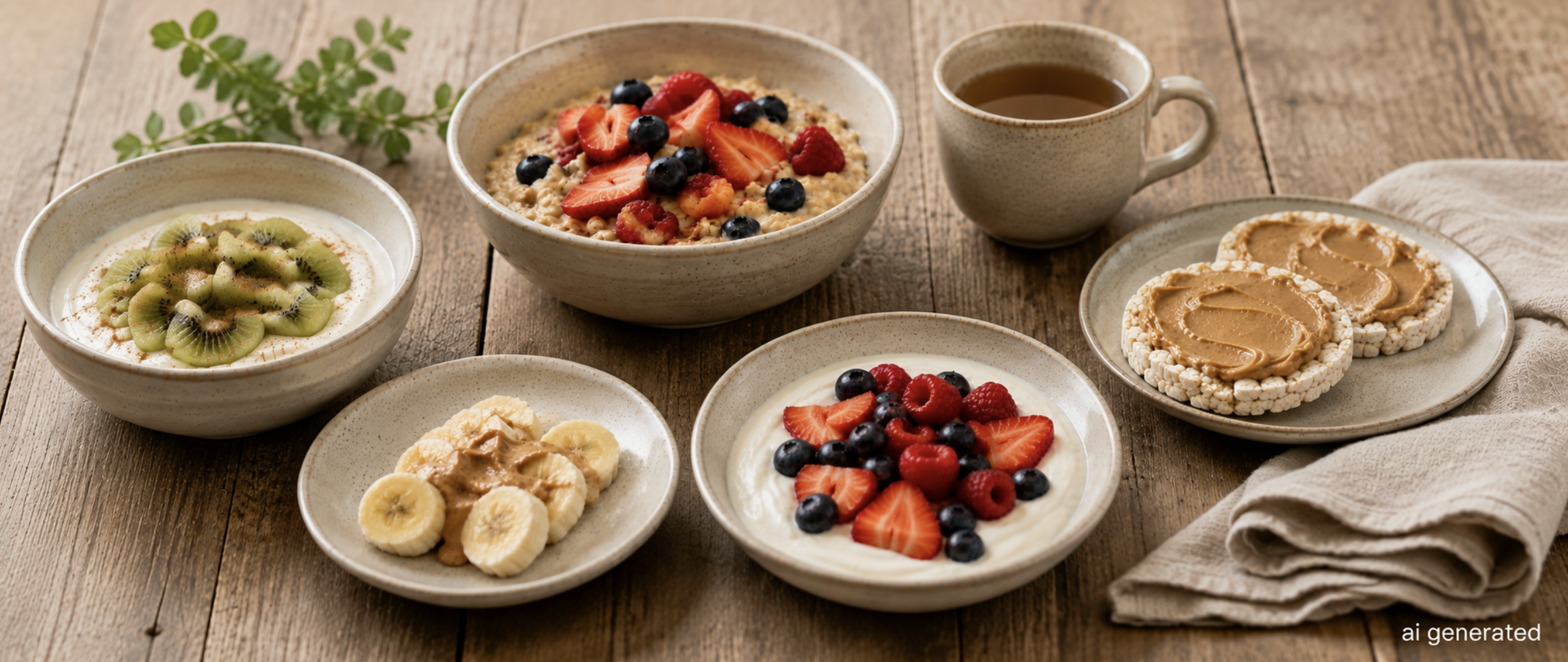
There is something especially annoying about feeling bloated in the evening. You have made it through the day, you finally want to relax, and suddenly your stomach feels heavy, tight and uncomfortable. I know how frustrating that feeling can be, especially when you are actually hungry and start wondering whether eating another snack is only going to make things worse.
One thing I have learned is that an evening snack does not automatically have to be bad for your digestion. For me, the bigger difference came from choosing simple foods, keeping portions reasonable and paying attention to how my own body responded instead of following a long list of foods that somebody on the internet told me I was never allowed to eat.
There is also no single “anti-bloating” food that works for everyone, because bloating can have many different causes and individual tolerances vary enormously. However, if you want something small in the evening, these are five simple options I personally think are worth trying.
1. Kiwi With Plain Yogurt
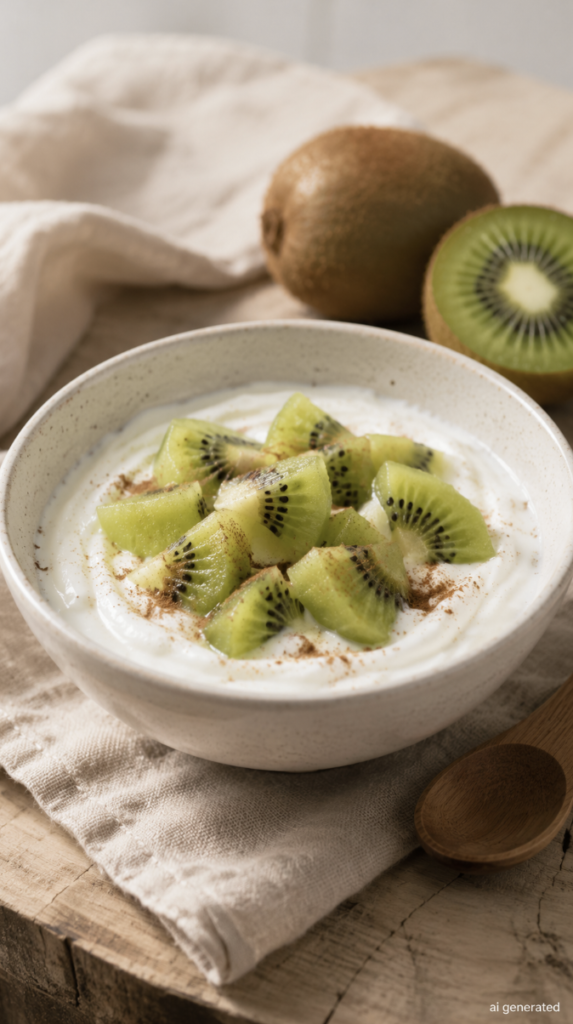
This is probably one of my favorite evening combinations because it is simple, refreshing and does not feel like an enormous second dinner before bed.
I like cutting one or two kiwis into small pieces and adding them to a small bowl of plain yogurt. Kiwi provides fiber, while yogurt can provide protein and, depending on the product, live bacterial cultures. It also satisfies that craving for something sweet without needing to turn the snack into a complicated dessert.
If regular dairy yogurt tends to leave you feeling uncomfortable, you could experiment with lactose-free yogurt instead. This is exactly why I think paying attention to your personal response is more useful than blindly copying somebody else’s diet.
Keep it simple: plain yogurt + sliced kiwi, and if you want a little more flavor, add some cinnamon.
2. A Small Bowl of Oatmeal With Berries
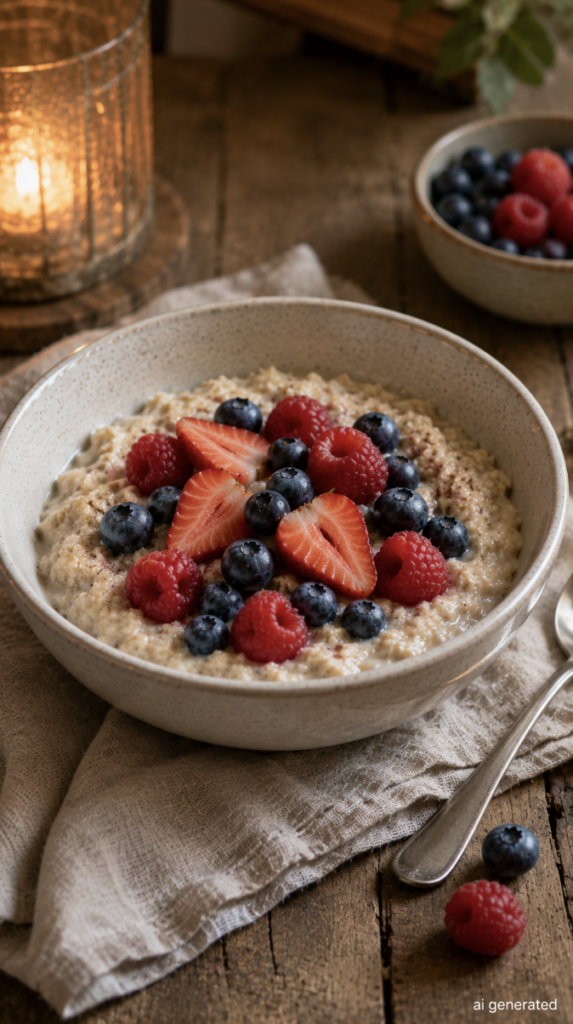
Oatmeal is usually associated with breakfast, but there is absolutely no rule saying you cannot eat it in the evening.
On nights when I want something warm and comforting, a small bowl of oats can be a great option. I prepare a modest portion of oats with water or milk that I tolerate well and add a handful of berries on top.
Oats contain soluble fiber, including beta-glucan, and berries provide additional fiber alongside various micronutrients and plant compounds. The important part, especially if you are not currently eating much fiber, is not to suddenly make an enormous bowl loaded with oats, berries, chia seeds, flaxseed and every other high-fiber ingredient you can find.
I learned that lesson the hard way: more fiber is not always better immediately. If your digestive system is not accustomed to it, dramatically increasing your intake overnight can actually make gas and bloating worse.
Start with a normal portion and gradually see how your body responds.
3. Banana With a Little Peanut Butter
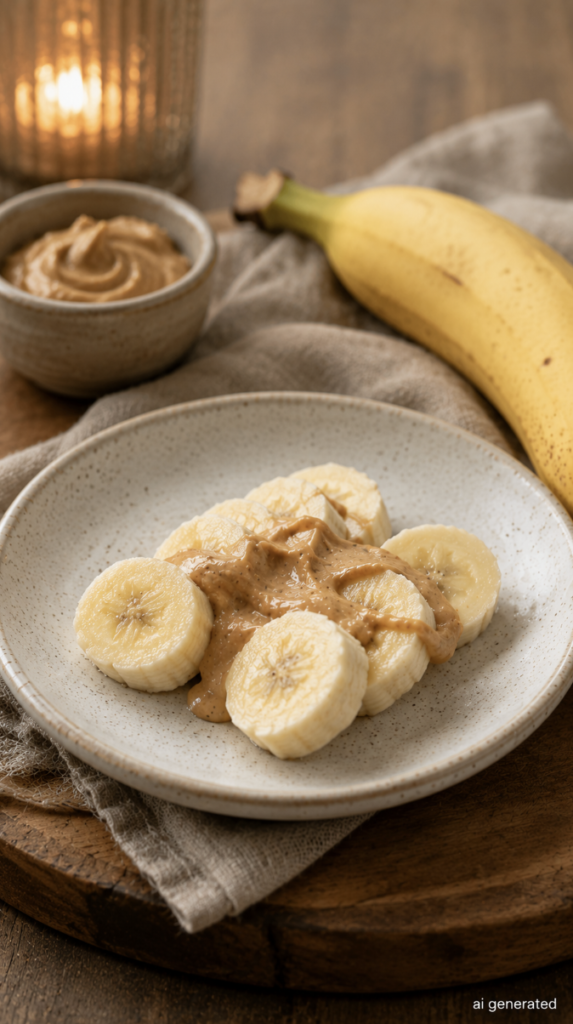
Sometimes I do not want to prepare anything at all, and this is where a banana with a small amount of peanut butter comes in.
It takes about thirty seconds to make, feels more satisfying than eating something tiny, and gives you a combination of carbohydrates and fat, with some protein from the peanut butter. I simply slice a banana and add a small spoonful of peanut butter rather than turning it into an enormous bowl with ten different toppings.
The ripeness of a banana can affect its carbohydrate composition, and people with sensitive digestion may tolerate bananas differently, so once again this is something to judge based on your own experience.
And that is really a theme you will notice throughout this article: your gut gets the final vote.
A food being described as “gut-friendly” does not mean your individual digestive system is required to love it.
4. Rice Cakes With a Simple Topping
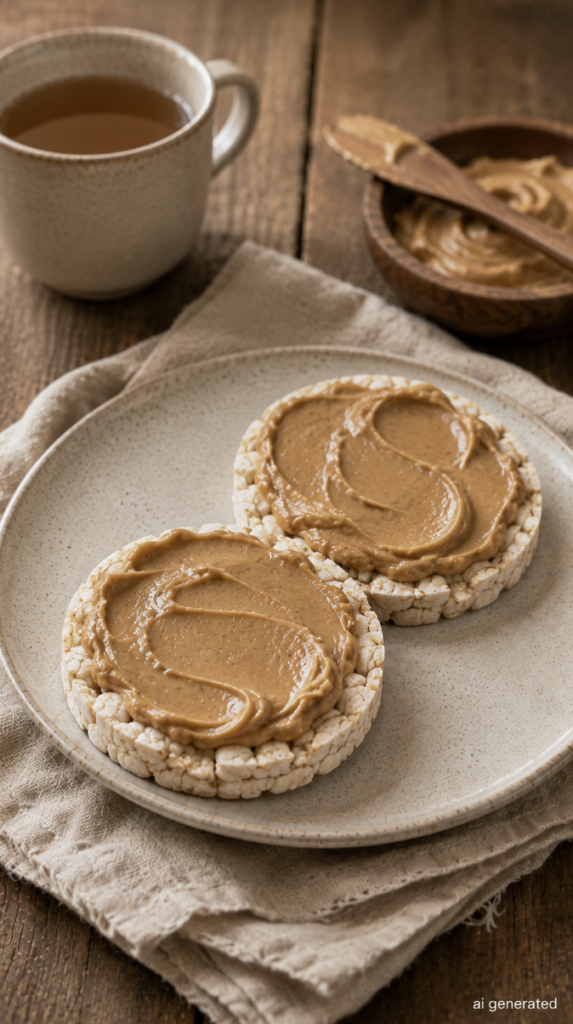
When my stomach already feels somewhat heavy in the evening, I usually do not want another large or complicated meal. A couple of plain rice cakes with a simple topping can be an easy alternative.
You could add a thin layer of peanut or almond butter, for example, or choose another topping that you personally digest comfortably. The point is not that rice cakes somehow magically eliminate bloating, because they do not. I simply like this option because it can be kept small and uncomplicated.
This also helped me realize something about my own eating habits: sometimes my evening “hunger” was actually just the habit of wanting to eat something while watching television.
Before making a snack, I started asking myself a very simple question: Am I actually hungry right now?
If the answer was yes, I ate something.
If the answer was no and I was simply bored, I did not automatically reach for food.
That small distinction helped me much more than creating strict rules about when I was or was not “allowed” to eat.
5. A Small Portion of Berries With Lactose-Free Yogurt
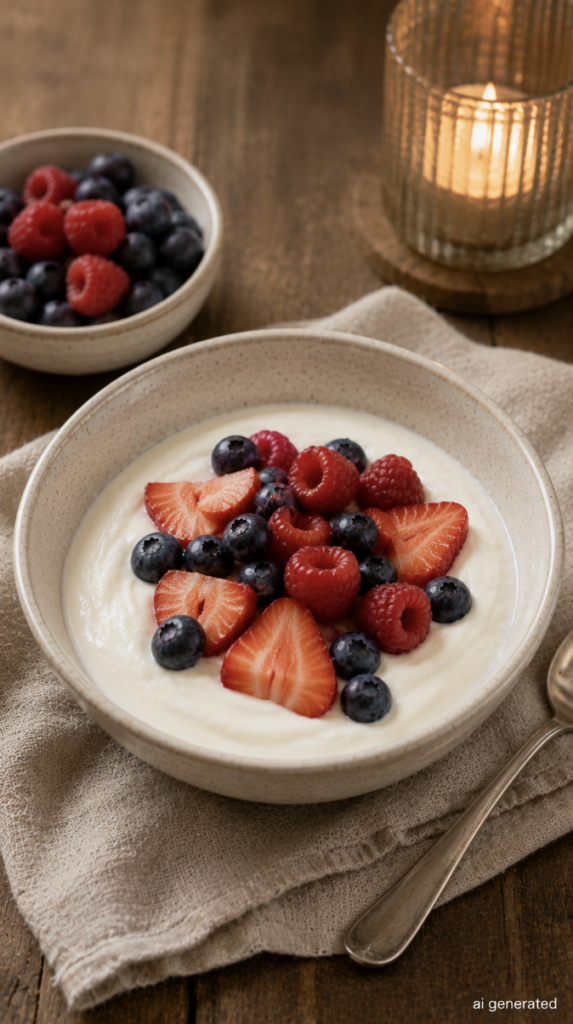
When I want something that feels more like dessert, berries with yogurt are difficult to beat.
Strawberries, blueberries or raspberries can add natural sweetness, and pairing them with plain yogurt makes the snack more satisfying. I personally prefer keeping the ingredient list short because I find it much easier to understand how my body responds when I am not combining fifteen different foods in one bowl.
You could simply use plain or lactose-free yogurt with a small handful of berries and leave it at that.
If you tolerate dairy perfectly well, there is no reason to avoid it just because somebody online says dairy causes bloating. On the other hand, if you repeatedly notice that certain dairy products leave you uncomfortable, that pattern may be worth discussing with a healthcare professional rather than simply ignoring it.
The Biggest Thing I Learned About Evening Bloating
For a long time, I thought finding the perfect foods would solve everything, but eventually I realized that how and how much I ate mattered too.
I could choose the healthiest snack imaginable, but if I ate a huge amount quickly while barely paying attention, I could still end up feeling overly full. On the other hand, eating a small, satisfying snack slowly and stopping when I felt comfortable often left me feeling much better.
I also stopped trying to make every snack a nutritional masterpiece. Your evening snack does not necessarily need probiotics, prebiotics, five different seeds, fermented foods, greens powder and a supplement sprinkled on top. Sometimes a banana and a spoonful of peanut butter really can just be a banana and peanut butter.
The goal is not to create the world’s healthiest snack. The goal is to find simple foods that satisfy you and that your own digestive system handles comfortably.
Want More Simple Gut-Friendly Ideas?
If there is one thing my own experience with gut health has taught me, it is that making everything complicated usually makes it harder to stay consistent. Small changes that fit naturally into everyday life have been much more useful to me than constantly jumping between restrictive diets and the newest gut-health trend.
That is exactly why I created my free Gut Health Guide, where I have collected practical tips, simple everyday habits and gut-friendly recipe ideas in one place. It is designed for people who want to start paying more attention to their digestion without completely turning their lives upside down.
Get my free Gut Health Guide and start with a few simple changes that actually fit into your everyday routine.
And remember that occasional bloating is common, while frequent or severe bloating can have many different causes. If your bloating is persistent, painful or worsening, or occurs alongside symptoms such as vomiting, blood or black stools, unexplained weight loss, fever or major changes in your bowel habits, speak with a qualified healthcare professional rather than trying to solve everything through food alone.
Leave a Reply