

I was standing in front of my closet about an hour after dinner, trying to put on the same jeans I’d worn earlier that day, completely comfortably, and suddenly they felt tight. Not “I ate a big meal” tight. More like my stomach had quietly turned into a balloon while I wasn’t paying attention.
I remember thinking, how can my stomach feel completely normal before eating and look and feel so different an hour later? We’d had a pretty ordinary dinner. Nothing weird, nothing huge. And yet there I was, unbuttoning my jeans and debating whether to just stay home instead of going out.
That moment is honestly what got me curious about digestion in the first place. Not a health scare, not a diagnosis — just genuine confusion about my own body. Over time, I started paying a lot more attention to what I ate, how fast I ate, how much I ate, and even things like stress that I never used to connect to my stomach at all.
Here’s something that helped me relax about the whole thing: bloating after eating can happen for a lot of different reasons, and occasional bloating doesn’t automatically mean something is wrong with your gut. Below are seven common reasons I learned about along the way.
1. Eating Too Quickly
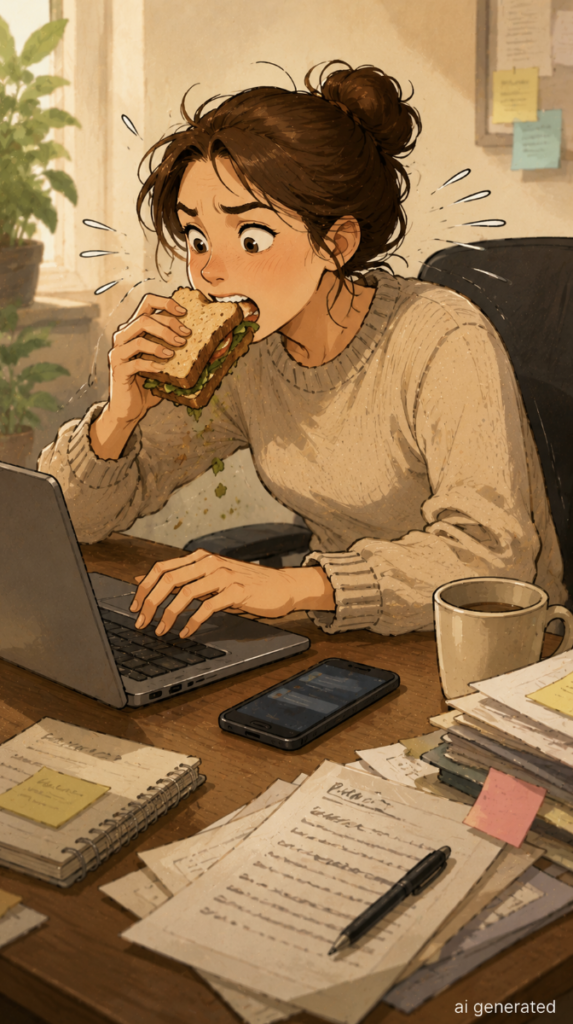
When you eat fast, you tend to swallow more air, and you can also blow past the point where your body would normally tell you “okay, that’s enough” before your brain catches up.
I noticed this most on days when I ate lunch at my desk while answering messages. I’d basically inhale a sandwich in about six minutes, still half-typing with my other hand. I barely registered eating at all until I stood up to refill my water and felt this heavy, tight fullness that hadn’t been there five minutes earlier. Looking back, it seems obvious, but at the time it wasn’t — I hadn’t even noticed I was rushing.
What helped was something small: putting my fork down between bites. It sounds almost too simple, but it forced me to actually slow down.
2. Eating a Very Large Meal

Sometimes bloating really is just about how much food you ate in one sitting.
I remember a night out where I’d barely eaten all day, showed up starving, and ordered way more than I normally would. Everything tasted great, so I kept going. By the time we were paying the bill, I was quietly loosening my waistband under the table. At first, I blamed the sauce on my pasta, but eventually I realized the amount of food itself was probably the bigger factor. My stomach simply had more to deal with than usual.
The takeaway for me wasn’t “never eat a big meal again.” It was just noticing that portion size matters, especially on days when I show up somewhere really hungry.
3. Suddenly Eating Much More Fiber

Fiber is genuinely good for you, but ramping it up too fast can backfire in the short term.
There was a stretch where I decided to “eat healthier” basically overnight. Oats for breakfast, a big salad for lunch, beans at dinner, chia seeds sprinkled on everything. I expected to feel amazing immediately, like my gut would just thank me on day one. Instead, I felt more bloated than before I started. That was when I started paying attention to how much I was actually changing, all at once, instead of gradually.
Fiber isn’t the villain here — it was more that my system needed time to adjust rather than a sudden overhaul.
4. Certain Carbohydrates Can Ferment in the Gut

This one took me longer to understand. Some carbohydrates aren’t fully absorbed before they reach the large intestine, where gut bacteria break them down and produce gas as a byproduct. Foods like onions, garlic, beans, certain fruits, and wheat-based foods are commonly mentioned here — but that doesn’t make them “bad.” Tolerance varies a lot from person to person.
I noticed this most clearly after a meal that had onions, garlic, and a big serving of beans all in the same dish. I felt noticeably more bloated than I expected from the portion size alone. Instead of cutting all three foods out immediately, I started just noticing when this combination showed up and how I felt afterward.
5. Carbonated Drinks

This one felt almost too simple when I finally connected it.
I was sitting outside on a warm afternoon, sipping sparkling water with dinner because it felt refreshing. I hadn’t eaten a huge amount, but afterward my stomach felt oddly full, almost tight. What confused me was that the meal itself was pretty light. Eventually I noticed a pattern: on days with several glasses of something carbonated, I felt more bloated than on days with plain water.
If you’re curious, it’s an easy thing to test. Try still water with a meal instead of sparkling and see if you notice a difference. It won’t be the same for everyone, but for me, it was noticeable.
6. Stress While Eating

This is the one that surprised me most, honestly.
I had a night where I sat down for dinner but was completely somewhere else mentally — replaying a stressful conversation from work, thinking about everything still on my to-do list. I ate the whole meal without really tasting much of it. Afterward, my stomach felt unusually uncomfortable, and I didn’t make the connection immediately. It took a few similar evenings before I realized it wasn’t always about what I was eating, but how present I was while eating it.
I’m not saying stress causes everyone’s bloating. But for me, eating while distracted or tense seemed to make a real difference. That’s when I started trying to treat meals as an actual pause, even a short one, instead of something happening in the background.
7. Food Intolerances or Individual Triggers

Some people notice the same uncomfortable feeling showing up after specific foods or ingredients, again and again. For me, it was a certain type of creamy, dairy-heavy meal that seemed to leave me bloated more often than not.
Instead of immediately cutting out ten different foods based on guesses, I started just paying attention to patterns. A simple food and symptom diary can help here if you’re trying to untangle what’s going on. And if bloating keeps showing up in a way that’s hard to explain, that’s genuinely worth bringing to a healthcare professional rather than trying to self-diagnose from the internet.
What I Learned From Paying Attention to My Bloating
For a while, I wanted one answer. One food to blame, remove, and be done with it. But digestion turned out to be more nuanced than that. Some days it was about what I ate. Other days it was how much, how fast, or honestly just what kind of day I was having.
A few habits that made a real difference for me:
- Eating more slowly
- Chewing properly instead of rushing
- Not overhauling my diet overnight
- Drinking enough water
- Paying attention to portion sizes
- Noticing recurring food patterns instead of guessing
- Actually sitting down to eat, even for ten minutes
These aren’t guarantees for anyone else — just what I noticed helped me.
When Bloating May Be Worth Checking Out
Occasional bloating is common and usually nothing to worry about. But if it’s persistent, frequent, or shows up alongside things like significant pain, vomiting, blood in the stool, unexplained weight loss, or major changes in bowel habits, that’s worth discussing with a healthcare professional.
Conclusion
I still think back to that moment in front of my closet, confused about how my stomach could feel so different in the span of an hour. Learning about digestion didn’t give me one magical answer. What it gave me was the ability to notice the small patterns in my everyday life — and honestly, understanding your own body takes time.
That curiosity is what led me deeper into gut health in the first place. Over time, I collected the simple habits, recipes, and practical things that helped me better understand and support my digestion, and I’ve put those together in my free Gut Health Guide. It includes simple gut-friendly recipes, everyday habits, beginner-friendly tips, and practical ideas you can actually try at home.
If you’re at the same point I was — trying to understand your gut without making everything unnecessarily complicated — you can grab my free Gut Health Guide here.
Leave a Reply